
Cold outreach has long been a pillar of B2B sales, but traditional automation often produces generic, robotic messages that get ignored. The high-performing cold email playbooks of 2026 are smarter, more adaptive, and rooted in behavioural signals. Done right, they drive genuine conversations and meetings without harming sender reputation or breaching spam law. This guide unpacks what effective cold email automation looks like in 2026, and how to build campaigns that actually get replies.
Why does most cold email automation fail?
Most cold email automation fails because teams scale fixed cadences before they validate data, understand buyer context, or protect sender reputation. Static personalisation fields create recognisable templates, while non-reactive follow-ups ignore opens, clicks, silence, and reply intent. The result is low relevance, weak replies, and domain fatigue.
Why do static cold email cadences lose relevance?
Static cold email cadences lose relevance because every prospect receives the same message path regardless of behaviour. A prospect who opens twice, clicks once, or ignores five emails should not receive the same next step. Cold email automation needs branching logic because buyer behaviour changes the right follow-up.
How does adaptive outreach improve reply quality?
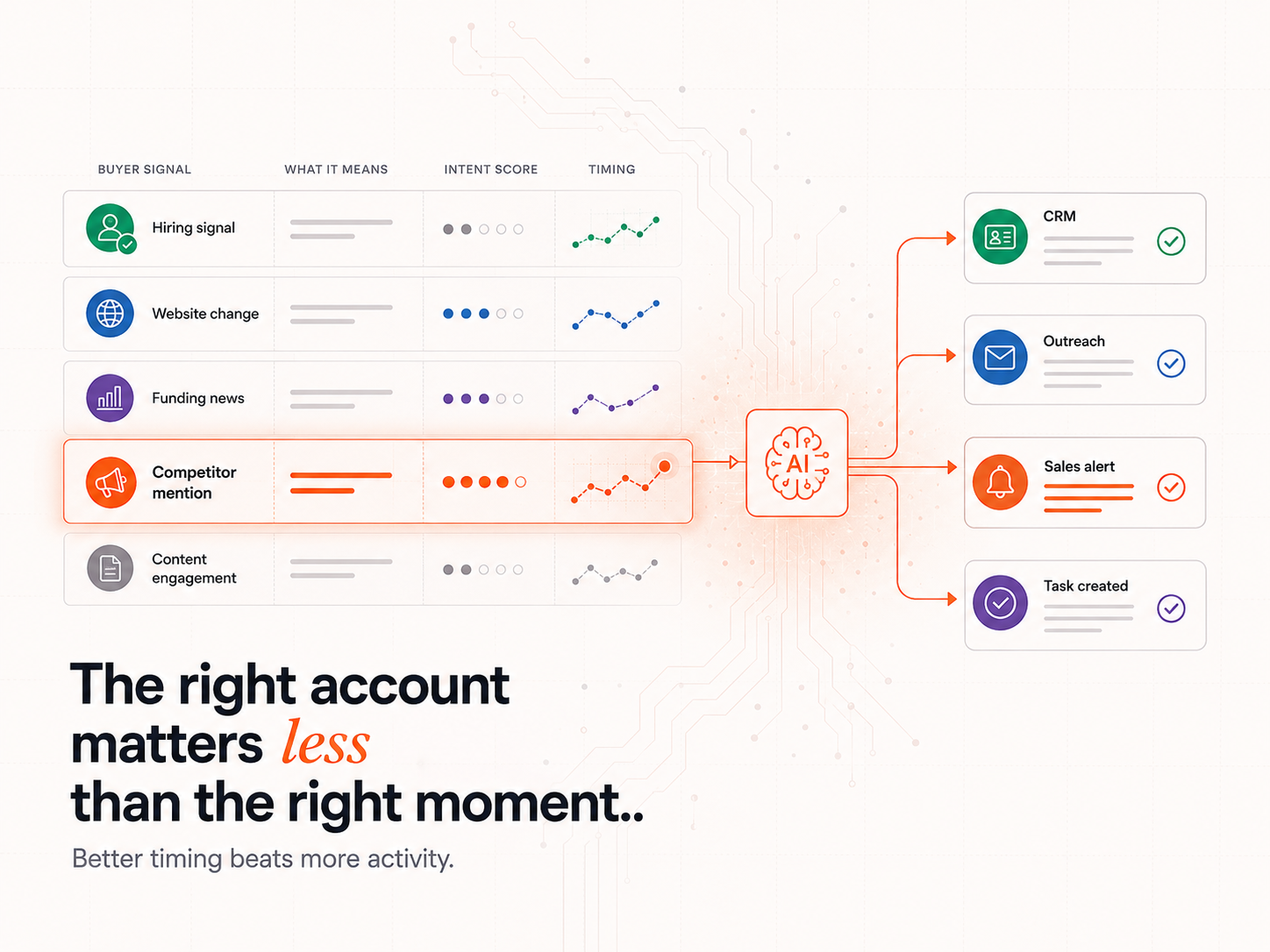
Modern playbooks use enriched data and behavioural triggers to decide when, how, and what to send next. If a lead views your pricing page, that triggers a personalised follow-up; if they ignore a message, a different path escalates to a call or ad touch. This style of sequencing, enabled by tools like Clay, Apollo, or Smartlead, keeps messaging relevant. It is the same logic behind signal-based automation: prospect quality rises when signal assembly and validation happen upstream of sequencing.
What Does a High-Performing Cold Email Automation Setup Look Like?
Components of an effective system (tools, data, sequencing)
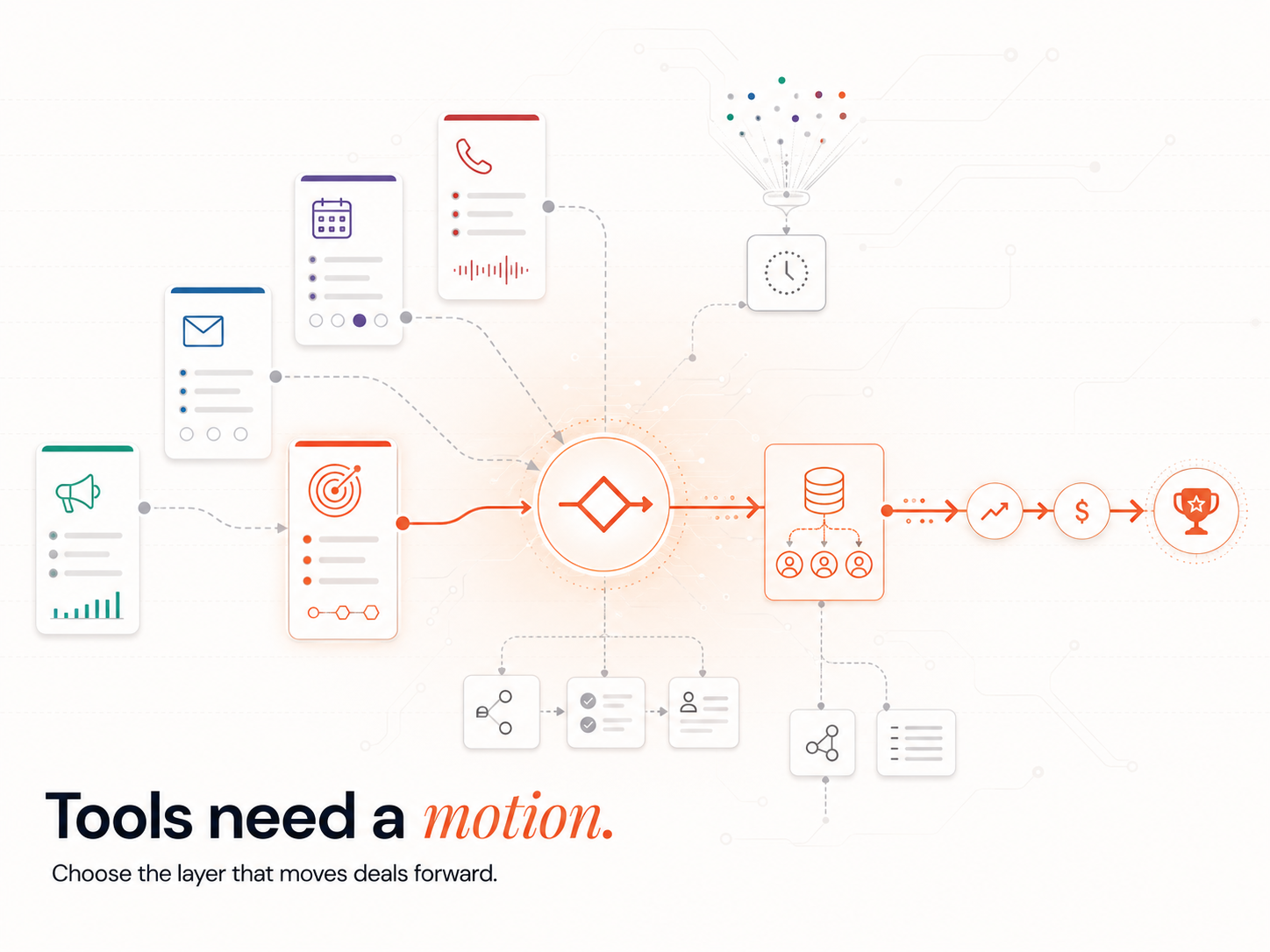
A robust setup has four layers:
- Data enrichment: Breeze Intelligence (formerly Clearbit) or Cognism to enrich leads with firmographics and intent.
- Sequencing with branching: Smartlead or Instantly for conditional, multi-step sequences.
- CRM integration: full write-backs and suppression logic so records stay clean.
- Deliverability infrastructure: Mailreach or Warmbox for warm-up and sender-reputation monitoring.
Which metrics matter beyond reply rate?
Focus on positive reply rate (excluding auto-replies and bounces), meetings booked per 100 leads, response time to first touch, and domain health. Benchmarks help calibrate: QuickMail, analysing 65 million emails, found the best 25% of campaigns reply at 20% or more, while around half sit under 10%. The Evergreen CRM keeps the underlying data clean so those metrics stay trustworthy.
How Can Automation Personalise at Scale Without Sounding Robotic?
Automation personalises at scale when it uses firmographic, technographic, behavioural, and timing signals instead of shallow merge fields. The message should prove relevance quickly without pretending to be hand-written. Cold email becomes credible when each detail maps to a real buyer context, not a decorative field.
Leveraging dynamic fields beyond first name and company
True personalisation draws from job titles, tech-stack mentions, mutual connections, and firm-specific news. The payoff is large: Woodpecker, analysing over 20 million emails, found advanced personalisation lifts reply rates from 7% to 17%, roughly 2.4 times. The goal is to make emails feel researched without spending hours per contact.
Using firmographics, intent data, and buyer signals
Smart fields insert these details dynamically, especially when paired with intent signals. Reference a recent product launch, a conference the company attended, or a funding round, and trigger sends off web visits, job postings, and buying signals. With Breeze Intelligence, Apollo, or Cognism, enrichment surfaces these signals before sequencing, so each send maps to a Verified Buying Window rather than a static list.
How Should Campaigns Adapt to Buyer Responses or Silence?
Cold email campaigns should adapt by routing opens, clicks, silence, replies, and elapsed time into different next actions. Fixed cadences assume every buyer needs the same follow-up. Signal Response Protocols treat engagement behaviour as routing data, which makes the next message more relevant and reduces unnecessary repetition.
Branching logic and auto-routing strategies
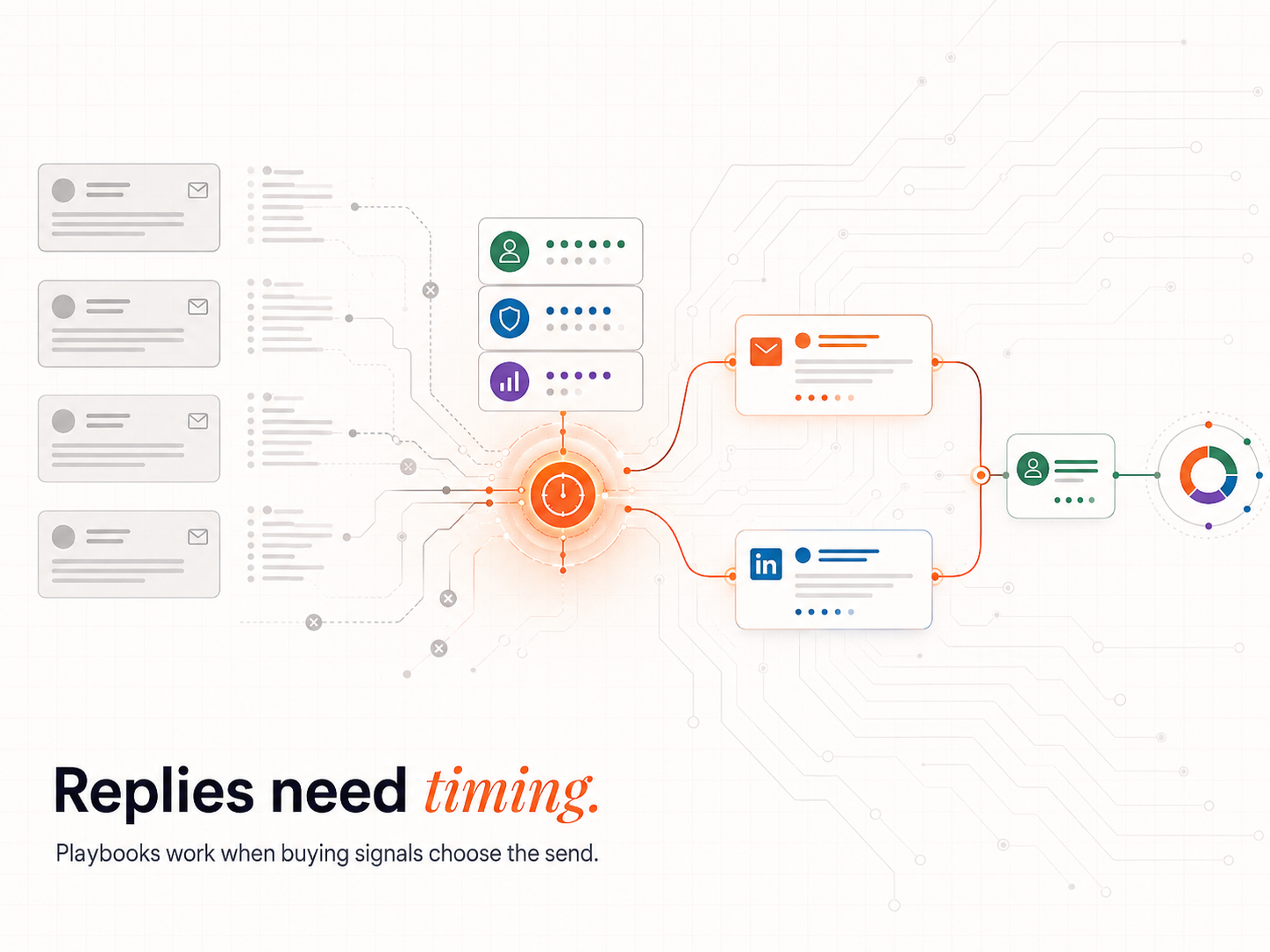
Rather than sending the same follow-up to everyone, adaptive systems use conditional logic. If a lead opens twice without replying, branch to a softer CTA. If they click the demo link, notify an SDR to call. If there is no engagement after five days, reroute to ad retargeting. These adaptive paths trigger from reply intent and elapsed time, not fixed cadence assumptions. That is what a Signal Response Protocol looks like in the cold email layer.
Retargeting and warm-up journeys based on engagement
Re-engagement works best sequenced across channels: cold email, then a LinkedIn visit, then a retargeting ad; or a soft opt-in email, then an SDR touch, then a personal video. SDRs can be alerted to high-intent leads in real time, improving speed to connect when it matters most.
What's the Ideal Balance Between Email, Ads, and SDR Touches?
The ideal balance uses email for relevance, LinkedIn for familiarity, retargeting for recall, and SDR touches for high-intent accounts. The sequence should create presence without pressure. Follow-ups matter because single-send cold email leaves reply opportunities untouched and fails to build recognition across channels.
Multichannel sequencing strategies
High-performing sequences blend channels over about 10 days: a personalised cold email on day 1, a LinkedIn profile view and connection on day 3, a tailored follow-up email on day 5, a retargeting ad and SDR voicemail on day 7, and a break-up email on day 10. This maximises visibility without spamming.
Follow-ups are not optional. Saleshandy, analysing over 100 million emails, found sequences with 3 to 5 follow-up steps reply at 8.3%, versus 4.1% for single sends, roughly double. The Clay-to-Smartlead handoff is where enrichment becomes a multi-step outbound sequence without buying lists.
Avoiding fatigue and message overlap
Set daily and weekly send limits per domain, use unique value props at each stage, and avoid LinkedIn messages that echo email copy. Owner changes, suppression logic, and CRM write-backs must resolve centrally to avoid conflicting tasks across channels.
What Data Validation Is Needed Before Launching Automation?
Cold email automation needs email verification, enrichment, suppression logic, and compliance checks before launch. Clean data protects sender reputation and reduces wasted sends.
Email verification and enrichment best practices
Start with a clean list. Run every address through validation tools like Bouncer or NeverBounce, then enrich with Breeze Intelligence or Clay for job title, company size, industry, and tech stack. Flag mismatches (a CMO title at a 2-person startup) and remove high-risk emails (temporary domains, no MX record) before any send.
How to Track Reply Quality, Deliverability, and Meetings Over Time
Cold email automation needs email verification, enrichment, suppression logic, and compliance checks before launch. Clean data protects sender reputation and reduces wasted sends.
Setting up granular reporting across stages
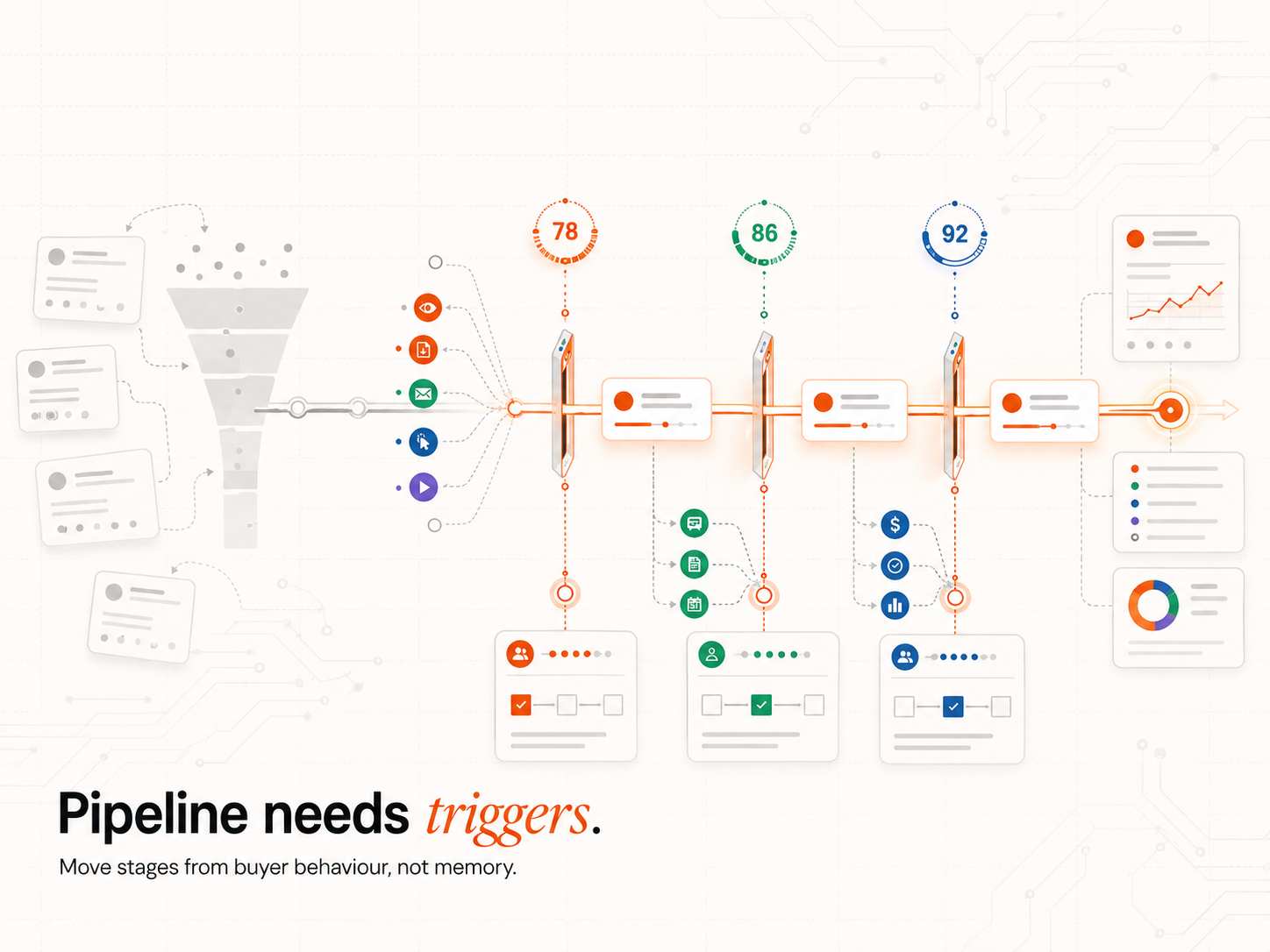
Track the full funnel: step-level drop-off, time-to-reply by persona, SDR follow-up time, and meeting conversion rate. Deliverability is part of the funnel: Instantly's 2026 benchmark found teams that keep domain health stable and send consistently see 15 to 20% higher replies. Visualise it in HubSpot, Clay, or Looker.
Tools for reply classification and meeting attribution
Tag every reply: positive (interested, booked, referred), neutral (not now, maybe later), negative (unsubscribe, not relevant). Reply classification matters more than reply count, because it feeds the Signal Response Protocol and the Evergreen CRM hygiene loop. Sync meeting attribution with calendar events, CRM activities, and tracked links.
Building Automation That Feels Personal and Performs at Scale
Done well, cold email automation does not mean losing the human touch. With the right data, tools, and adaptive logic, teams scale outreach while keeping it personal and compliant. By focusing on signal-led triggers, multichannel paths, and measurable outcomes, cold outreach becomes a lever for real pipeline growth rather than a volume game that burns sender reputation.
How many steps should a cold email sequence have?
Most effective sequences run 4 to 8 steps over 2 to 3 weeks, and the follow-ups matter more than the first send: multi-step sequences reply at roughly double the rate of single sends. Step count matters less than branching logic and signal triggers, though. A short sequence with conditional logic beats a long one on fixed cadence.
Should cold emails always include a calendar link?
Not always. For high-intent leads who clicked pricing or re-engaged on a signal, yes. For cold top-of-funnel messages, a softer CTA ("Worth a 10-minute chat?") performs better. The calendar link works once the prospect is partially qualified; it backfires before that.
What is the ideal send time for high reply rates?
Tuesday and Wednesday mornings (8 to 10am local) tend to see the highest reply rates, and replies cluster mid-week. Avoid Friday afternoons and Mondays. For Australian sends, account for the AEDT and AEST split and avoid the pre-8am Sydney window.
How often should cold outreach playbooks be refreshed?
Every 4 to 6 weeks for sequence content, and every quarter for ICP and signal definitions. Sequences left untouched beyond 8 weeks lose reply rate as the messaging stales and the prospect pool refines around it.
Can automated cold emails comply with Australian law?
Yes. The Spam Act 2003 and Privacy Act 1988 both permit B2B cold outreach under conditions: documented lawful basis, a working unsubscribe, accurate sender identification, no deceptive subject lines, and opt-out respected within 5 business days.
How can you test if your cold email copy sounds robotic?
Read it aloud. If you would not say it to a stranger at a conference, rewrite it. Send it to three colleagues who do not know the campaign and ask whether it reads as AI-written. If two say yes, revise until it sounds like a person.
Prospecting
The difference between outbound that books meetings and outbound that burns domains is the playbook. The Revenue Operations Studio at Intelligent Resourcing builds signal-triggered cold email playbooks: clean data, conditional sequencing, deliverability infrastructure, and reply classification wired to the CRM.