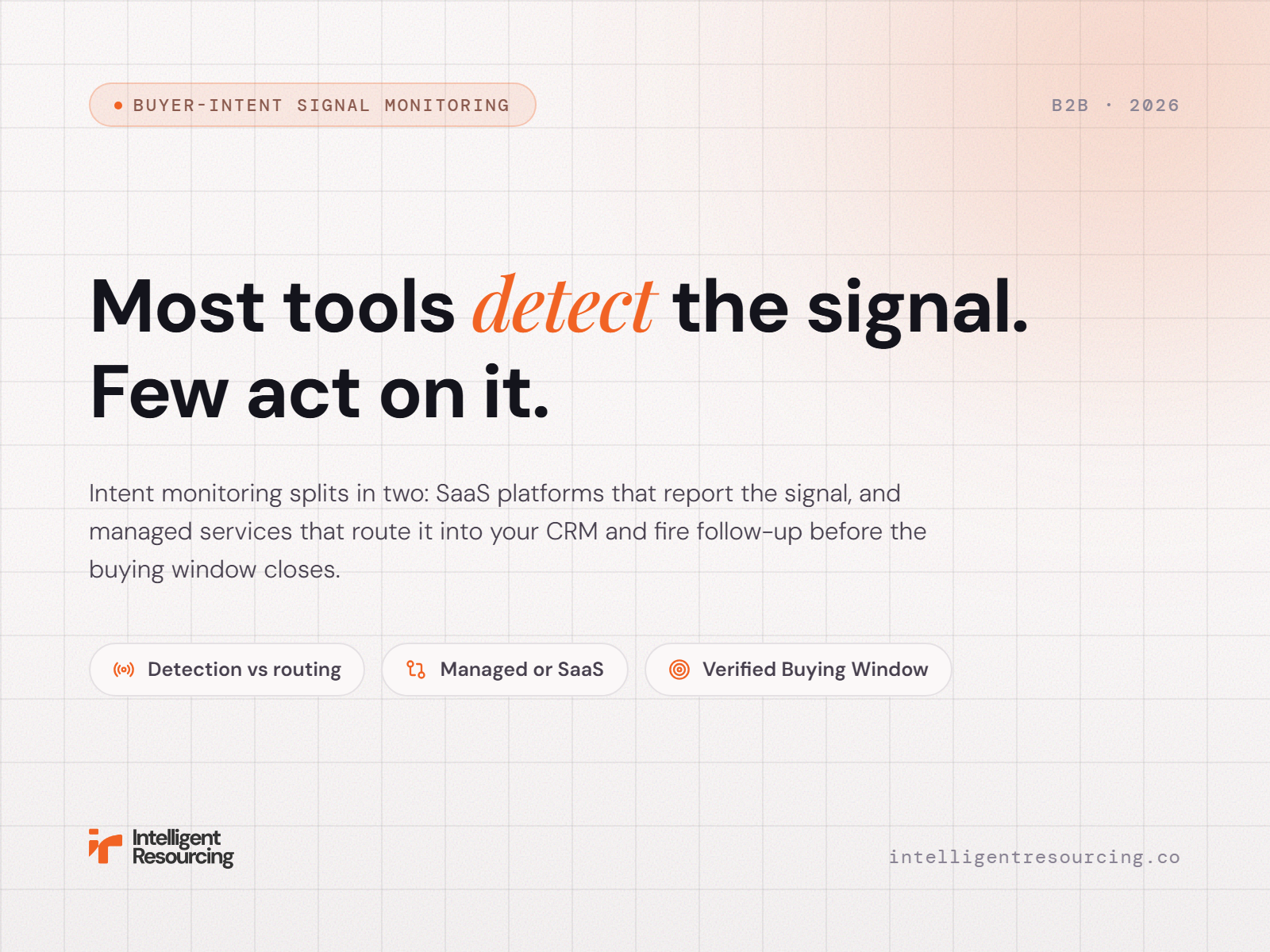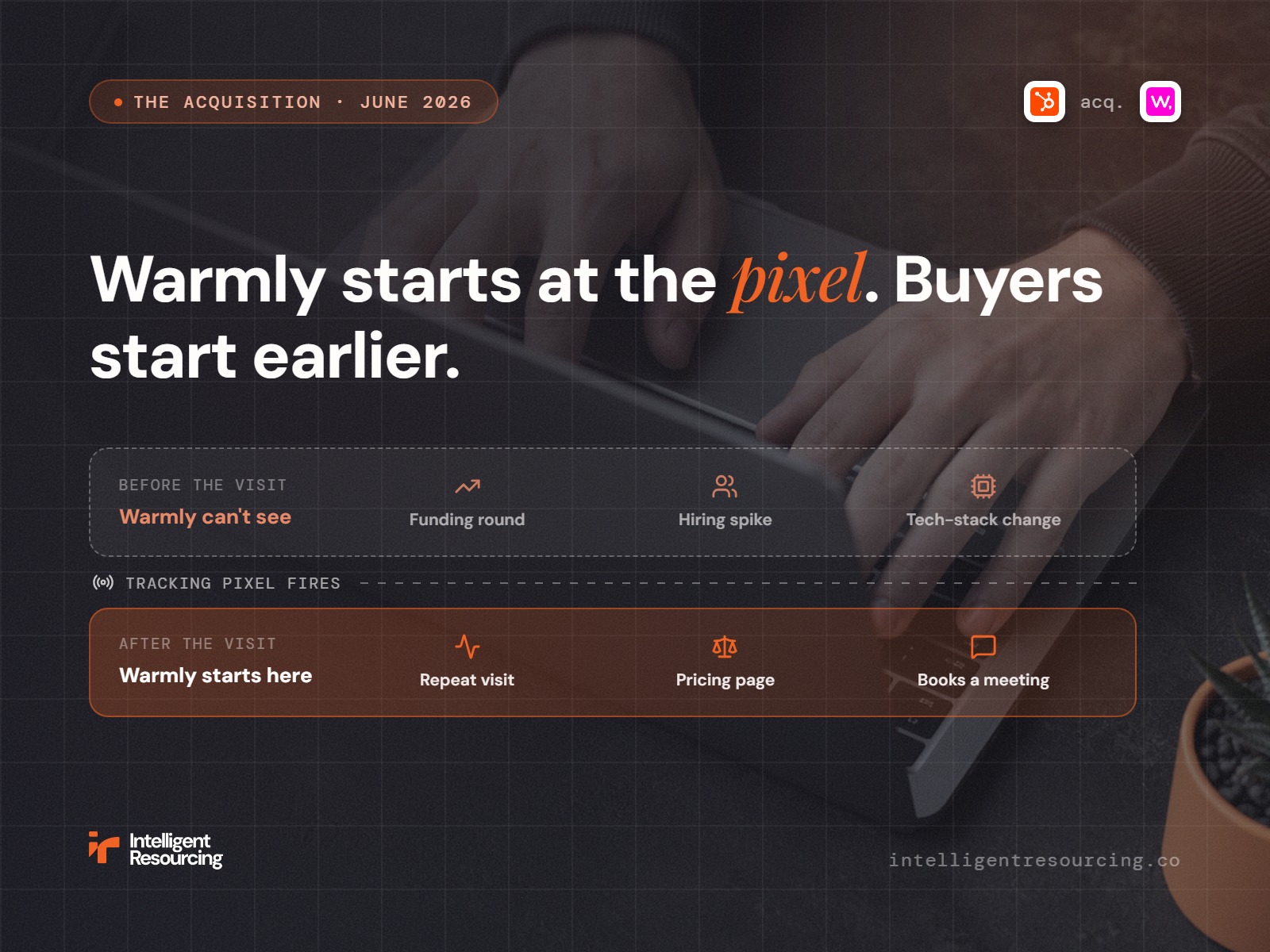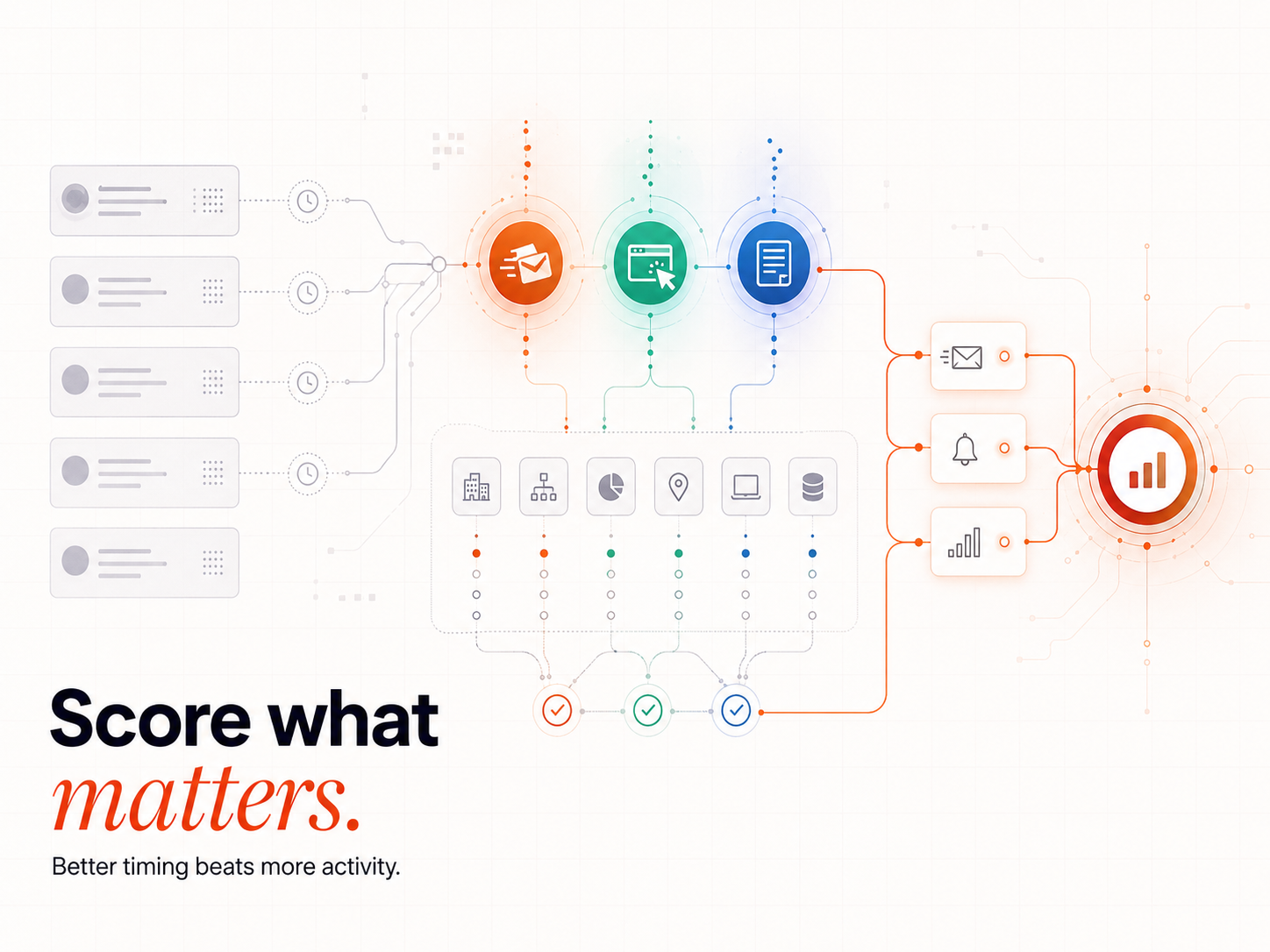

Are you struggling to reach potential customers at the right moment? Signal-based marketing offers a timely solution. Instead of broadcasting generic messages, it listens to behavioural cues (also called buying signals) and tailors responses accordingly. As privacy rules tighten and cookies decline, this real-time, data-driven approach becomes essential for marketers. For any b2b lead generation agency, signal-based marketing represents a fundamental shift in how pipeline is built and measured.
In this blog, we'll explain signal-based marketing, how it differs from traditional methods, and how your business can start using it to boost relevance and results.
Understanding Signal-Based Marketing
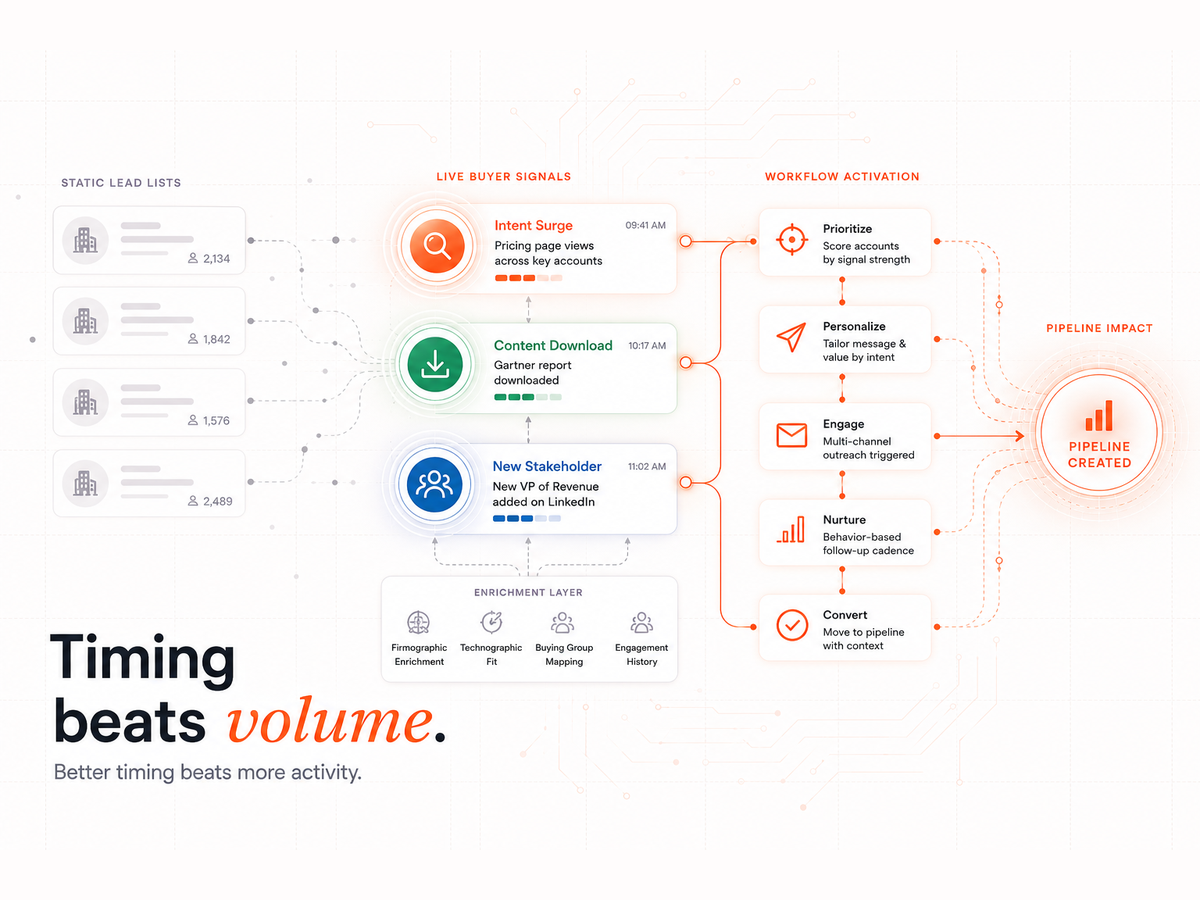
Signal-Based Marketing is a GTM strategy that triggers outreach based on verified buyer behaviors (hiring, funding, tech installs) rather than static lists. Unlike cold outreach, it focuses on timing and intent. Average conversion rate: 5-15% (vs <1% for cold email).
Unlike traditional data-driven marketing that relies on static segments or historical data, signal-based strategies prioritise real-time, context-aware triggers. This makes it highly relevant for today's fast-moving MarTech stacks and revenue teams seeking timely, personalised outreach.
How Does Signal-Based Marketing Differ from Traditional Marketing?
| Feature | Traditional Marketing | Signal-Based Marketing |
|---|---|---|
| Trigger | Calendar Schedule | Real-Time Behavior |
| Data Source | Static Lists (ZoomInfo) | Live Signals (Hiring, API) |
| Time to Action | Days/Weeks | 3 Hours |
| Conversion Rate | < 1% | 5-15% (High Intent) |
Traditional marketing often operates on a batch-and-blast model, using broad segments and scheduled campaigns. For example, a weekly newsletter or general awareness ad.
Signal-based marketing, by contrast, is adaptive. It listens for key actions, a pricing page visit or a product demo request and activates tailored responses.
Comparison Table
Example: Instead of sending a product email to every subscriber, signal-based marketing waits until a user downloads a buyer guide, then sends a demo invite within hours.
What Are Buying Signals in Signal-Based Marketing?
Buying signals are observable behaviours that indicate a prospect or customer may be considering a purchase. These signals help marketers identify high-intent individuals and act quickly to guide them through the funnel.
Behavioural Signals
These include actions like:
- Visiting product or pricing pages
- Downloading whitepapers or eBooks
- Clicking on email CTAs
- Repeated return visits to your website
Technographic and Firmographic Signals
Examples include:
- Changes in company size, industry focus, or tech stack
- Company receives funding or hires a new executive
- Shifts in revenue or market expansion
Engagement Signals
- Webinar attendance
- Social media interaction (likes, shares, mentions)
- Direct message queries or form submissions
Intent-Based Triggers
- Searching for related products on review platforms
- Comparing multiple vendors
These signals help pinpoint prospects who are actively researching, allowing timely and personalised follow-up.
What Is the Difference Between Intent Data and Signal-Based Marketing?
| Feature | Intent Data | Signal-Based Marketing |
|---|---|---|
| Source | Third-party data aggregators | First-party and second-party systems |
| Data Type | Aggregated keyword and topic-level data | Behavioural, firmographic, technographic |
| Timing | Often retrospective | Real-time or near real-time |
| Granularity | Audience-level or account-level | User-level or account-level behaviours |
| Common Use Cases | Lead scoring, ABM | Automated engagement, GTM alignment |
The terms "intent data" and "signals" are often used interchangeably across GTM teams and for good reason. They both help identify meaningful triggers that can power smarter outreach, lead routing, and campaign activation.
But inside modern workflows, they can play slightly different roles.
Choose Traditional Outbound if you rely on high-volume, cold outreach and accept low conversion rates. Choose Intelligent Resourcing's Signal-Based approach if you prioritize high-intent meetings, lower CAC, and outreach triggered by verified buying behaviors.
What Types of Signals Are Used in Signal-Based Marketing?
Signals are categorised based on where they originate and how they're used.
First-Party Signals
Collected directly from your owned channels:
- Web analytics (e.g. product page visits)
- CRM activity logs
- Email campaign responses
Second-Party Signals
Gathered from strategic partners or affiliates:
- Behaviour from co-marketing campaigns
- Referral site activity
- Shared CRM data with integrations
Third-Party Signals
External sources such as:
- Bombora, G2, or LinkedIn data
- Aggregated keyword searches
- Industry trends from market data platforms
Predictive Signals (AI-enhanced)
Machine learning algorithms can forecast intent by combining multiple inputs and patterns over time.
Example: A lead visits your careers page, follows your brand on LinkedIn, and downloads a whitepaper. AI models may score this behaviour as a high likelihood to convert.
The Future of Signal-Based Marketing
AI and Machine Learning
Advanced models will increasingly drive signal analysis, automatically surfacing the most relevant behaviours to act on. Predictive capabilities will become more accurate, unlocking hyper-personalisation.
Privacy and the Cookieless Era
With the decline of third-party cookies, businesses must rely more on first-party and permission-based data. Signal-based marketing aligns naturally with this shift.
Emerging Tools and Platforms
Platforms like 6sense, Dreamdata, and Mutiny are leading innovation in signal-driven insights. Watch for tools that combine signals from anonymous web visitors with firmographic overlays to improve B2B targeting.
Optimisation Tips for Signal-Based Campaigns
| Signal | Suggested Response |
|---|---|
| Visited pricing page | Send ROI calculator or case study |
| Attended webinar | Follow up with relevant blog or guide |
| Viewed three or more product pages | Trigger sales outreach or demo invitation |
| Downloaded product brochure | Enrol in nurture sequence |
Common Mistakes to Avoid
- Delaying response: Signals lose value quickly if not acted on promptly.
- Overloading with low-value triggers: Not all activity equals interest.
- Ignoring context: One action might not indicate readiness unless supported by others.
Best Practices
- Real-time response: Aim for responses within one to three hours.
- Signal prioritisation: Rank triggers by importance and impact.
- Team alignment: Ensure marketing and sales act on the same insights.
Sample Signal → Response Table
How to Start With Signal-Based Marketing (Checklist)
Here's a simple checklist to launch your signal-based marketing strategy:
- Review your current MarTech stack for data readiness
- Identify key signals your prospects already exhibit
- Map each signal to funnel stages (e.g. awareness vs. purchase)
- Choose tools to capture, analyse, and act on signals
- Build simple automations (e.g. lead alerts, content triggers)
- Align your teams on ownership and SLAs
- Define a feedback loop for reviewing campaign performance
- Optimise continuously using test-and-learn cycles
Are your competitors acting on buyer signals while you're still batching emails?
Signal-based marketing helps you move at the speed of intent—not inertia. Connect with us to help you build the workflows, tools, and triggers to make every signal count and keep your marketing relevant and competitive.
Buyer Intent
Your competitors are acting on buyer signals while you're still batching emails. Let's build the workflows, tools, and triggers to make every signal count.