What is sales automation tooling actually for?
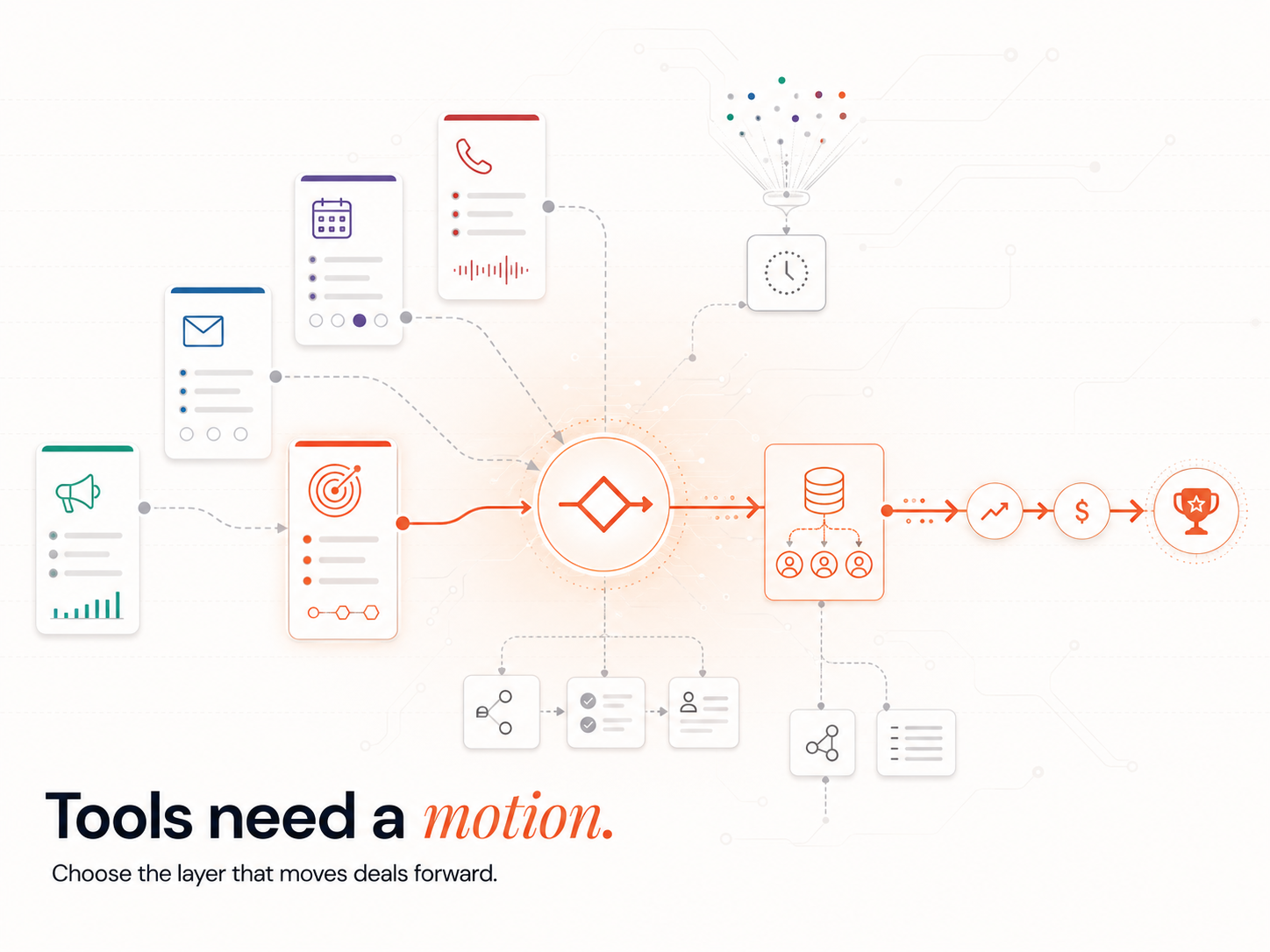
Sales automation tooling is the infrastructure that turns prospecting, sequencing, scoring, and pipeline movement into structured, observable, repeatable workflows. It is not "send more emails faster." It is the operating layer that lets a small Australian B2B team behave like a much larger one, with the same conversion ratios, the same forecasting discipline, and the same data hygiene.
The reason it matters in 2026: AI agents and copilots are now embedded inside the major sales platforms. The competitive question is no longer "do we use AI?" It is "have we wired the AI into a motion that compounds, or into a tool stack that fragments?" Teams that win the second question own the engine. Teams that lose their own subscriptions.
How do you pick the right tool category for your sales motion?
Pick by the motion, not by the vendor. There are four common sales motions for Australian B2B teams: high-velocity outbound, inbound-led growth, mixed mid-market, and enterprise multi-product. Each motion has a tool category that fits it natively, and a category that fights it. The most expensive mistake is buying tools for a motion you do not actually run.
How to pick:
- Audit your last 50 closed-won deals. Where did the lead originate (outbound, inbound, referral, expansion)? That ratio is your motion.
- If outbound is the dominant source, the gap is SDR-to-AE coordination. The right category is combined sequencing plus pipeline.
- If inbound is the dominant source, the gap is workflow rigour on warm leads. The right category is CRM-native automation.
- If you cannot tell because tracking is broken, fix tracking before you buy anything else. No tool fixes attribution.
What does the best AI-driven prospecting layer look like in 2026?
The best prospecting layer is the one wired to your ICP definition, not the one with the largest database. Apollo, Cognism, and Clay solve different problems. Apollo gives you scale and integrated sequencing. Cognism gives you compliance-clean data for AU and EU buyers. Clay gives you bespoke enrichment workflows when no off-the-shelf database fits.
Apollo
Apollo suits outbound-heavy teams that want a single tool covering database, sequencing, and dialler. Real-time enrichment, A/B sequence testing, AI-assisted personalisation, webhook handover to CRM. Best when you need to ship outbound at volume without procurement overhead on three tools.
Cognism
Cognism suits teams selling into Australian or EU buyers where data privacy compliance is procurement-relevant. Bombora-powered intent signals, advanced filtering on industry and role and tech stack, integrations with sequencing tools. Best when compliance maturity is a buying criterion in your ICP.
Clay
Clay suits growth teams building experimental, AI-powered prospecting workflows. Pulls from 50-plus data sources, custom enrichment fields using GPT or Claude, logic chains for smart targeting, direct CRM and email platform connections. Best when your ICP is too narrow or too unusual for templated databases. As a Clay workflow specialist, Intelligent Resourcing builds custom Clay automations that turn prospecting into Signal-Led Growth motions.
What does pipeline automation actually need to do?
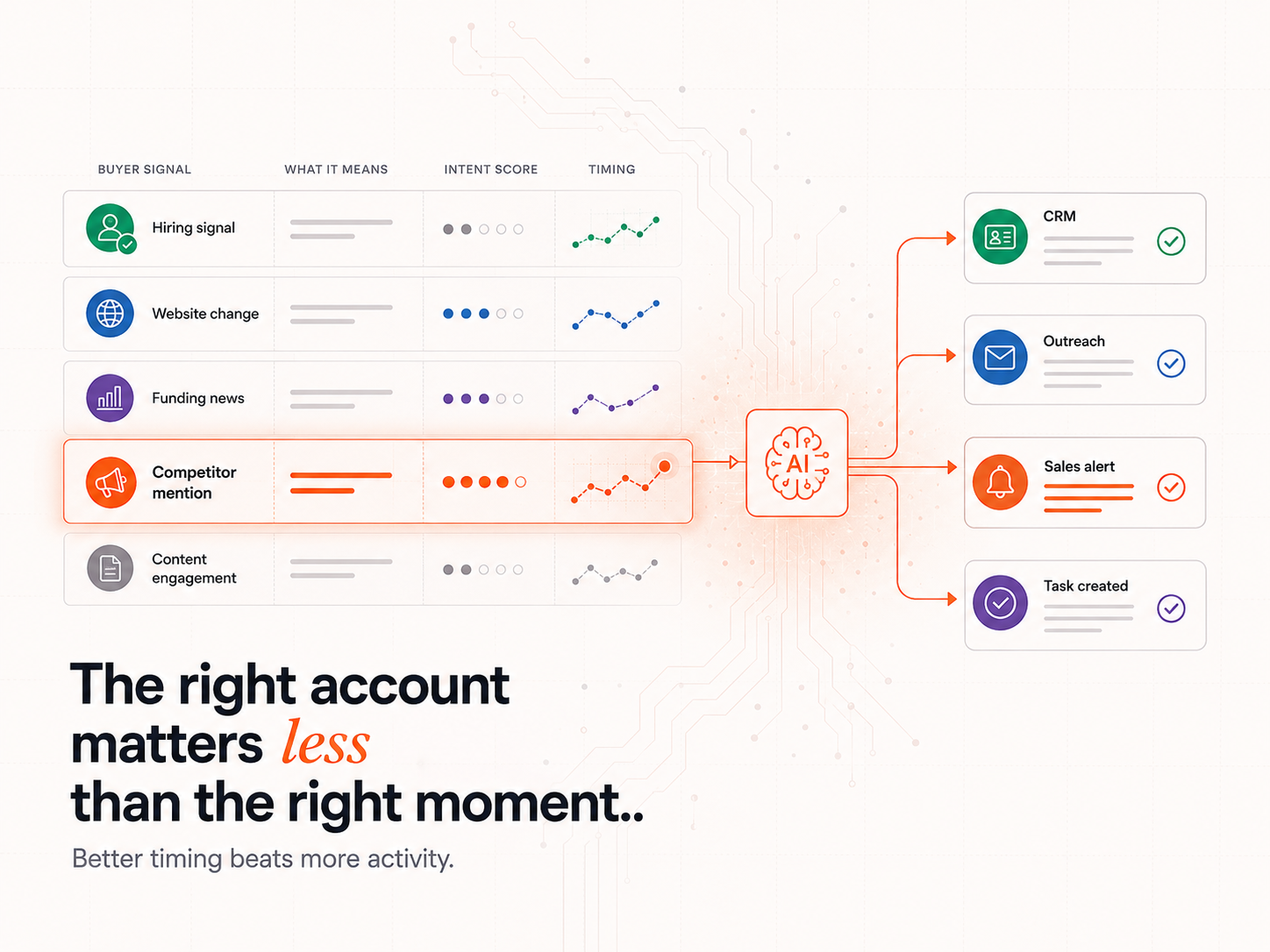
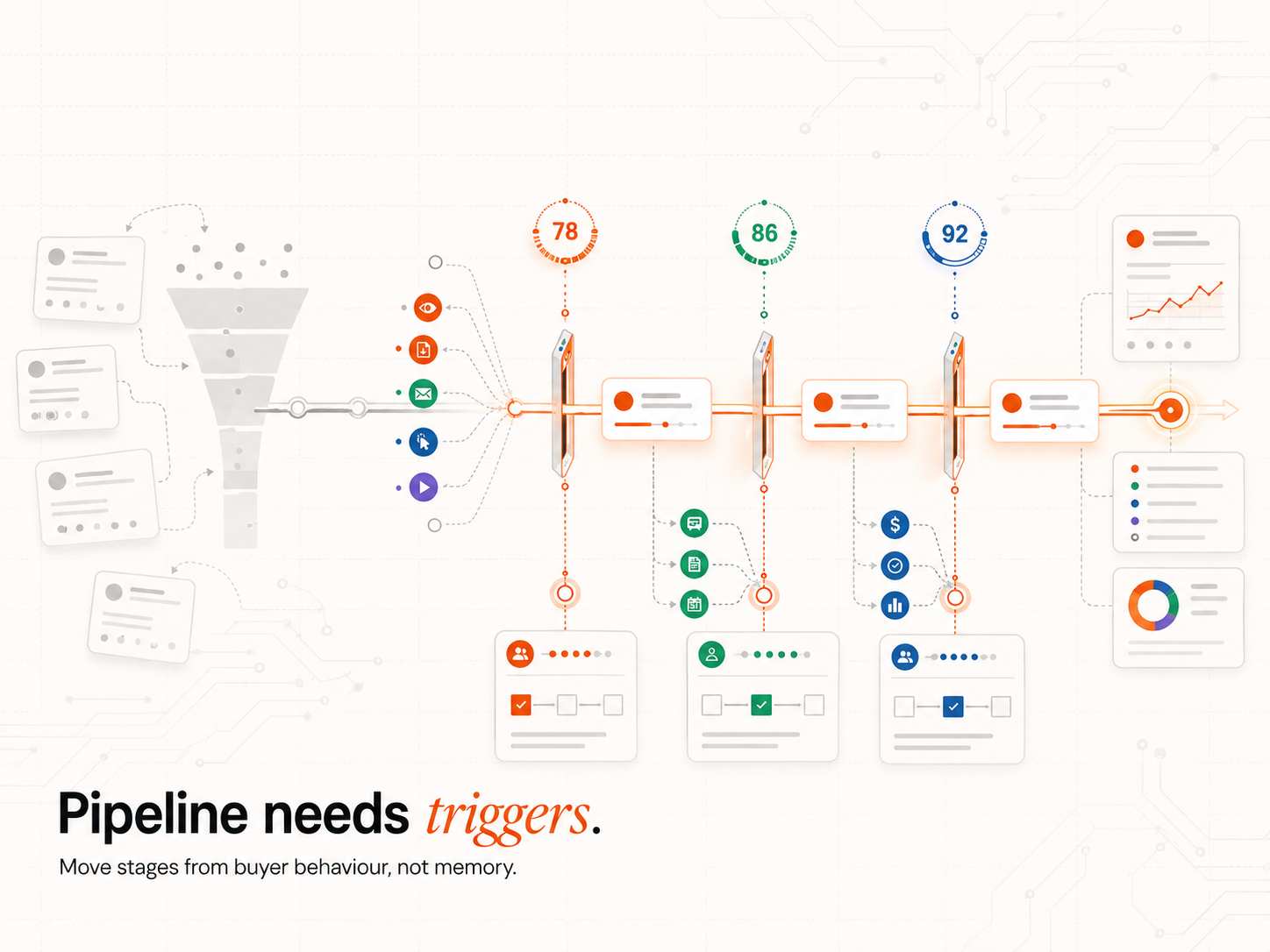
Pipeline automation needs to do four things: trigger task assignment based on deal stage or buyer behaviour, route deals between roles cleanly, sync the CRM in real time, and surface forecast risk before the close date arrives. Anything more is feature theatre. Anything less is a spreadsheet with a UI.
Salesforce Sales Cloud
Salesforce remains the default for full-cycle enterprise teams. Einstein AI for scoring and forecast adjustments, customisable pipeline stages with validation rules, deep integration with marketing and service tools. Best when deal complexity is genuinely enterprise-grade.
HubSpot Sales Hub
HubSpot suits scaling B2B firms that want quick deployment and a clean UI. Visual workflow builder, task automation triggered by deal stage or engagement, AI forecasting reports (released 2026), seamless integration with marketing and chat modules. Best when you want the same vendor for marketing automation and sales.
Pipedrive
Pipedrive suits smaller AU and NZ teams with straightforward sales processes. Activity-based automation, AI assistant for performance alerts, strong mobile app, budget-friendly pricing. Best when you want pipeline rigour without enterprise overhead.
What do combined prospecting + pipeline platforms add that single-category tools miss?
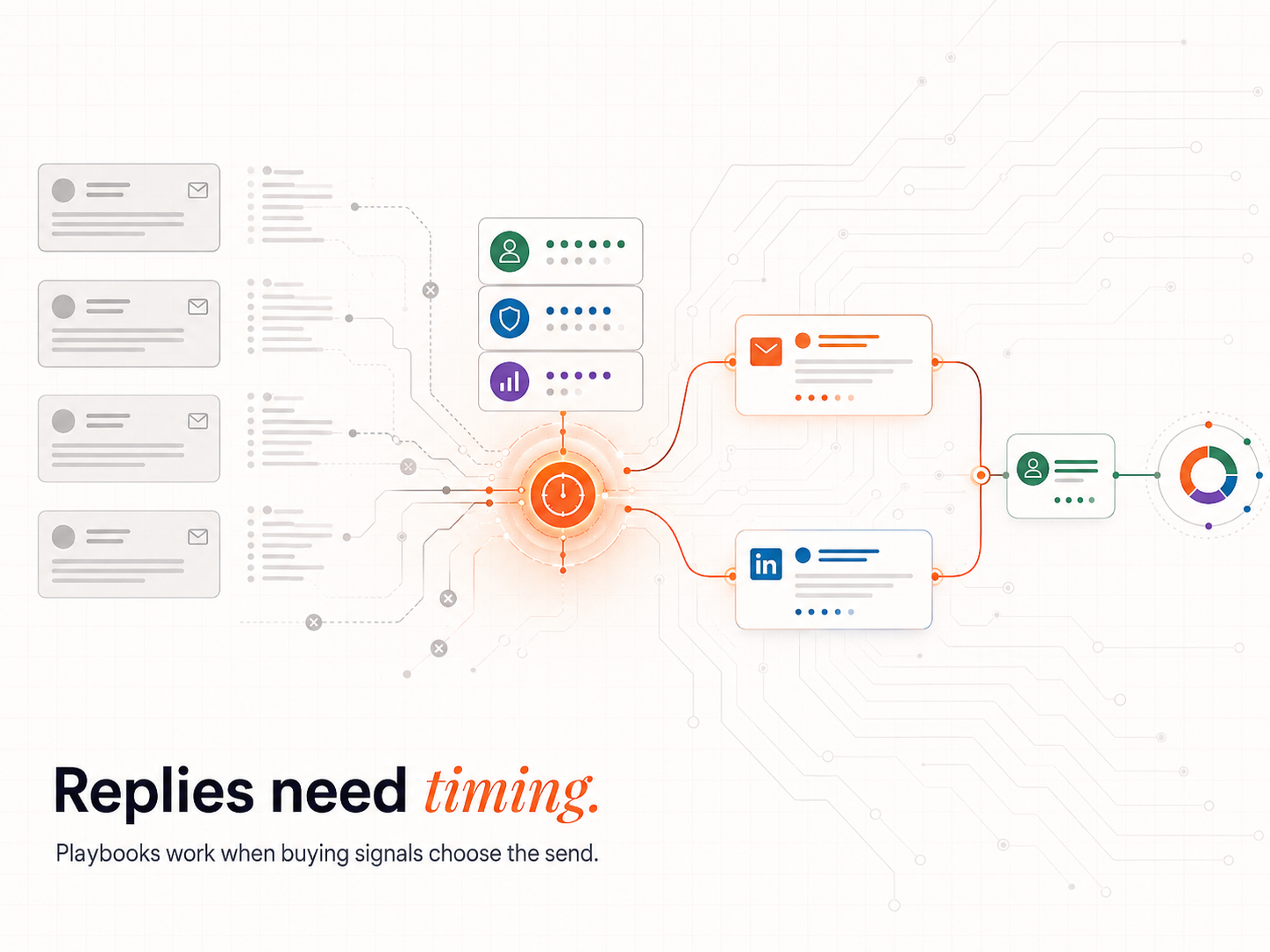
They add motion-level coordination. The handover between SDR and AE is where most outbound pipelines leak. Combined platforms own both sides of that handover with a single data model, a single set of role-based templates, and a single pipeline inspection layer. The result: fewer leads dropped, faster cycle times, cleaner forecast data.
Outreach.io
Outreach is built for high-volume SDR development teams. Sequencing with performance analytics, deal health scoring using machine learning, task boards aligned with CRM stages, role-based templates for SDRs and AEs. Best when SDR-to-AE handover is your operational bottleneck.
Salesloft
Salesloft focuses on full sequencing plus pipeline sync. Email, phone, and social sequencing, pipeline inspection dashboards, native integrations with Salesforce, HubSpot, MS Dynamics, real-time cadence updates based on buyer signals. Best for enterprise teams needing AI plus human collaboration across the cycle.
Freshsales
Freshsales offers full-cycle sales automation at lower cost. Visual pipeline builder, Freddy AI assistant for scoring and forecasting, built-in dialler and email tracking and chat integration. Best for AU startups or cost-conscious teams exploring automation for the first time.
How do you make sure your tools actually integrate with the rest of the stack?
Verify integration depth before procurement, not after. A native integration listed on a vendor's website is not the same as a working two-way sync. The questions that matter: does the tool support two-way CRM sync (not just push), can it handle custom fields and deal stages, are there limits on data volume or users or API calls, and can you connect your existing prospecting and marketing and reporting tools?
Integration is the leading cause of automation programmes failing in year two. Tools that looked native at procurement turn out to be brittle webhooks held together by a junior RevOps person. The Revenue Operations Studio model treats integration as a first-class deliverable: every integration is documented, monitored, and owned. Signal Response Protocols depend on the integrations working. When the integrations fail, the signals miss, and the engine stops compounding.
A pre-purchase integration checklist:
- Two-way CRM sync confirmed, including custom objects and custom fields.
- API rate limits and data volume limits documented and acceptable for your scale.
- Webhook reliability tested for the specific events you depend on.
- A named owner for the integration in your team (not the vendor's).
Where do Australian B2B teams need to think differently?
Australian B2B teams need to think differently in three places: data privacy compliance, time-zone overlap with US and EU vendors for support, and the realities of selling into a smaller domestic market. Australian Privacy Act compliance is not the same as US data handling; some global vendors are stronger here than others. Time-zone overlap with vendor support hours matters more than US teams realise. And the domestic addressable market is smaller, which makes ICP precision more important than ICP breadth.
Austrade's 2025 SME analysis found that Australian businesses with structured CRM and automation stacks export 1.6x more often than peers without (Austrade, 2025). The implication for tool selection: the stack does not just serve domestic sales motion. It serves cross-border motion too. Tools that handle multi-currency, multi-language, and multi-timezone routing earn extra weight in the AU context.
What does a stack look like for each sales motion?
A sales automation stack should match the team’s dominant route to revenue. High-velocity outbound needs prospecting and sequencing depth. Inbound-led growth needs CRM-native workflow control. Mixed AU/NZ teams need orchestration. Enterprise multi-product teams need Salesforce-grade governance and a dedicated automation layer.
| Motion | Prospecting | Sequencing | CRM | Orchestration |
|---|---|---|---|---|
| High-velocity outbound | Apollo or Clay | Outreach or Smartlead | HubSpot or Salesforce | n8n or Make for custom routing |
| Inbound-led growth | None (or LinkedIn Sales Nav) | HubSpot Sequences | HubSpot Sales Hub | HubSpot Workflows |
| Mixed mid-market AU/NZ | Clay + Apollo | Smartlead + Heyreach | HubSpot or Pipedrive | n8n or Clay-as-orchestrator |
| Enterprise multi-product | Cognism or ZoomInfo | Salesloft | Salesforce Sales Cloud | Salesforce Flow + custom |
The vendor names will change over a 12-month window. The motion-to-category map will not. Intelligent Resourcing's Revenue Operations Studio designs the stack against the motion, then implements it inside the client's existing tools, so the architecture survives vendor churn.
Prospecting
The Revenue Operations Studio at Intelligent Resourcing designs the motion first, then the stack: Clay for prospecting precision, HubSpot or Salesforce for pipeline rigour, Smartlead or Salesloft for sequencing, n8n for signal routing. Your team owns it.
FAQs
What tools combine prospecting and pipeline automation in one platform?
Outreach, Salesloft, and Freshsales are the main combined platforms in 2026. They handle prospecting sequences, CRM sync, and pipeline visibility in one interface. The trade-off versus a best-of-breed stack: less flexibility on the prospecting side, but tighter SDR-to-AE handover. Pick combined when handover is your bottleneck, best-of-breed when prospecting precision is.
What features should B2B teams prioritise in sales automation tools in 2026?
AI scoring tied to real signals (not just demographics), multichannel sequencing across email and LinkedIn and phone, two-way CRM integration with custom fields, real-time pipeline updates, and automated task creation linked to deal stages. Skip vendor features that demo well but do not connect to your motion.
How do AI tools integrate with CRMs like Salesforce or HubSpot?
Through native integrations, public APIs, and webhook-based event handoffs. Native integrations are the safest bet for two-way sync. API and webhook integrations are more flexible but require ownership in your team. Test the specific events you depend on before procurement, not the integration as a general claim.
What is the difference between sales engagement and pipeline automation?
Sales engagement tools focus on outreach: email, phone, and LinkedIn sequencing, plus engagement tracking. Pipeline automation tools focus on deal movement: stage progression, forecasting, task coordination. Combined platforms like Outreach and Salesloft offer both. The Revenue Operations Studio model treats them as two halves of the same engine.
Are there Australian sales automation tools worth evaluating?
A small set of Australian vendors exist, but the dominant 2026 stacks for Australian B2B teams use global tools (HubSpot, Salesforce, Clay, Apollo, Outreach) configured for Australian Privacy Act compliance and AU-NZ time zones. The Australian value-add is in the implementation layer, not the tool layer.
How do you avoid tool sprawl when buying sales automation?
Start with the operating model, not the tool. Document the motion, the roles, the handover points, and the data model. Then select tools that fit each layer of the motion, not tools that demo well in isolation. Run a 30-day pilot with a single team before procurement. Cancel tools that do not earn their seat after 90 days.