
What Is an AI Sales Agent and How Does It Differ From Basic Automation?
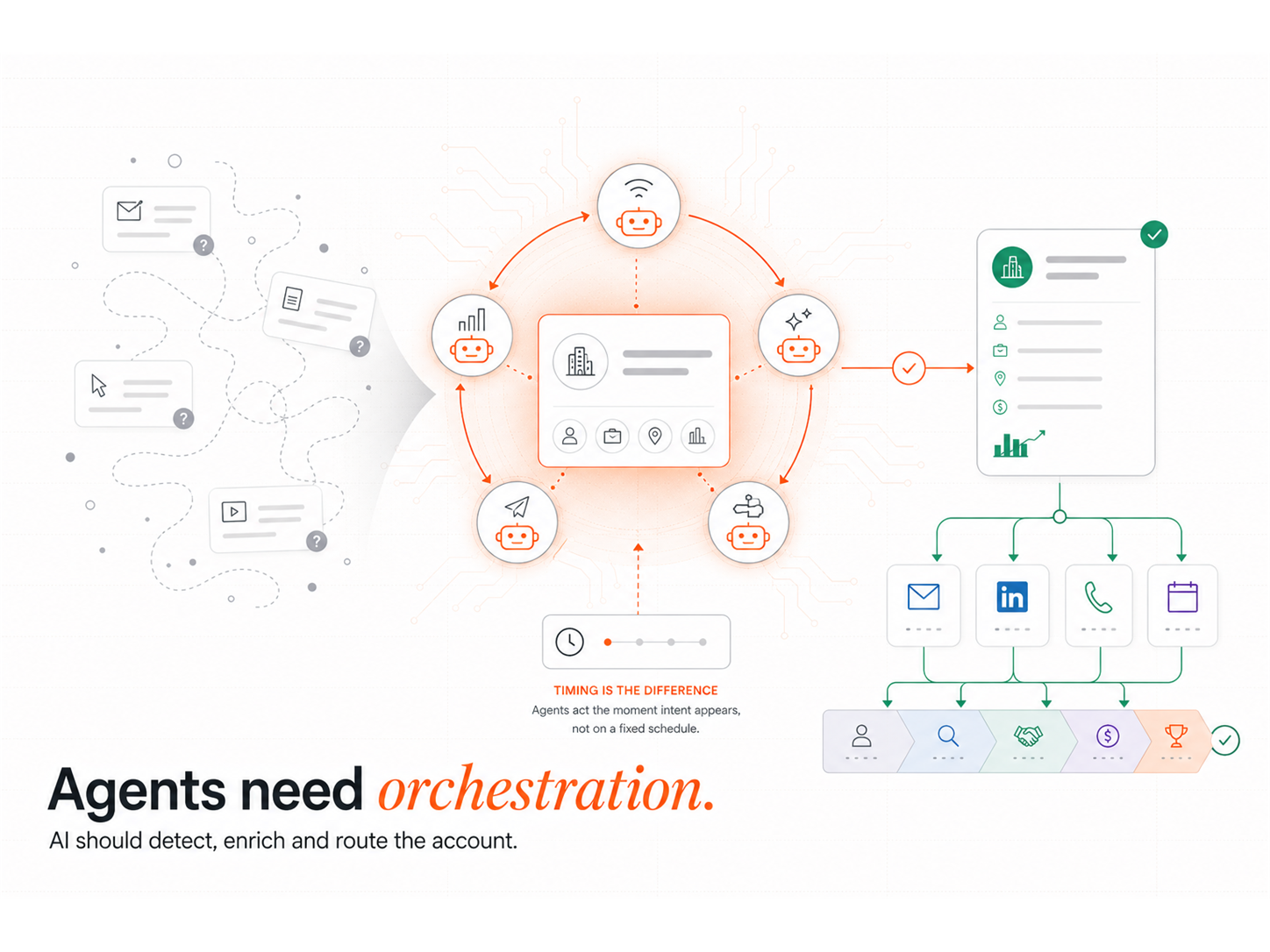
AI sales agents execute top-of-funnel tasks autonomously: researching prospects, enriching contact records, launching outreach, and managing follow-up sequences. The critical difference from basic automation is decision logic. Basic automation sends the same email to every contact on day 3 of a sequence. An AI agent evaluates each prospect's data, determines the right timing, and escalates to a human SDR only when the engagement signal warrants it.
HubSpot's 2026 State of Marketing report found 61% of sales and marketing teams believe the industry is in its biggest disruption in 20 years. The mechanism driving that disruption is not generative content. It is autonomous agents that execute prospecting work at a scale no SDR headcount can match.
Rule-based vs LLM-powered agents
Rule-based agents follow if/then logic: email opened after 24 hours = send follow-up; no reply after 3 days = switch to LinkedIn; link clicked = escalate to SDR. They are predictable, auditable, and low-risk for compliance-sensitive environments. The limitation is rigidity. A rule-based agent cannot adapt its message to a context it was not programmed to handle.
LLM-powered agents use large language models to write context-aware messages, process variable reply logic, and manage multi-threaded conversations across multiple contacts at the same account. They produce better personalisation at scale but require stronger oversight for tone, brand consistency, and legal compliance.
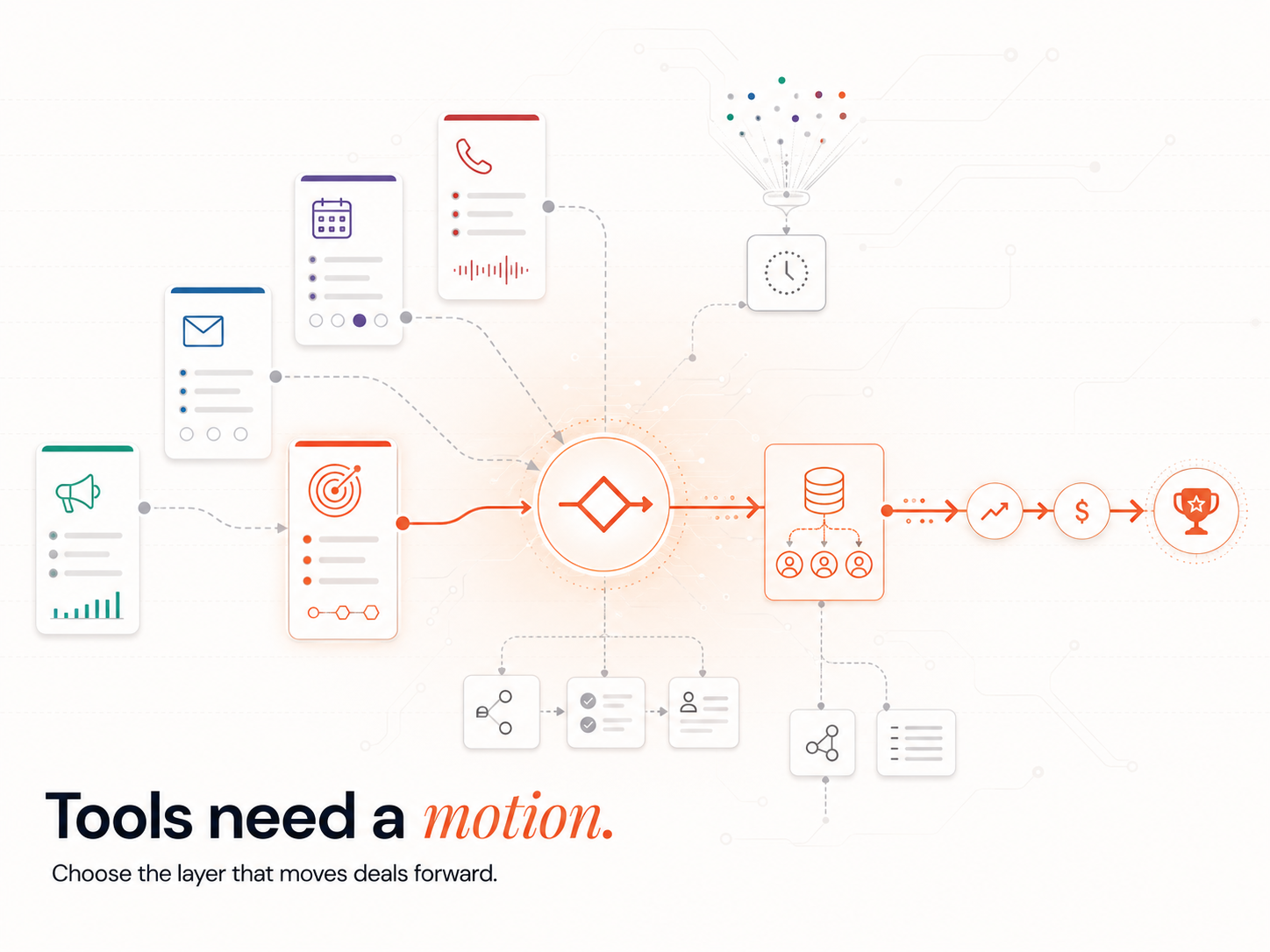
For most B2B prospecting stacks in 2026, the right architecture is a hybrid: rule-based orchestration for sequencing logic, LLM for message personalisation within each step.
What signal-led agents add
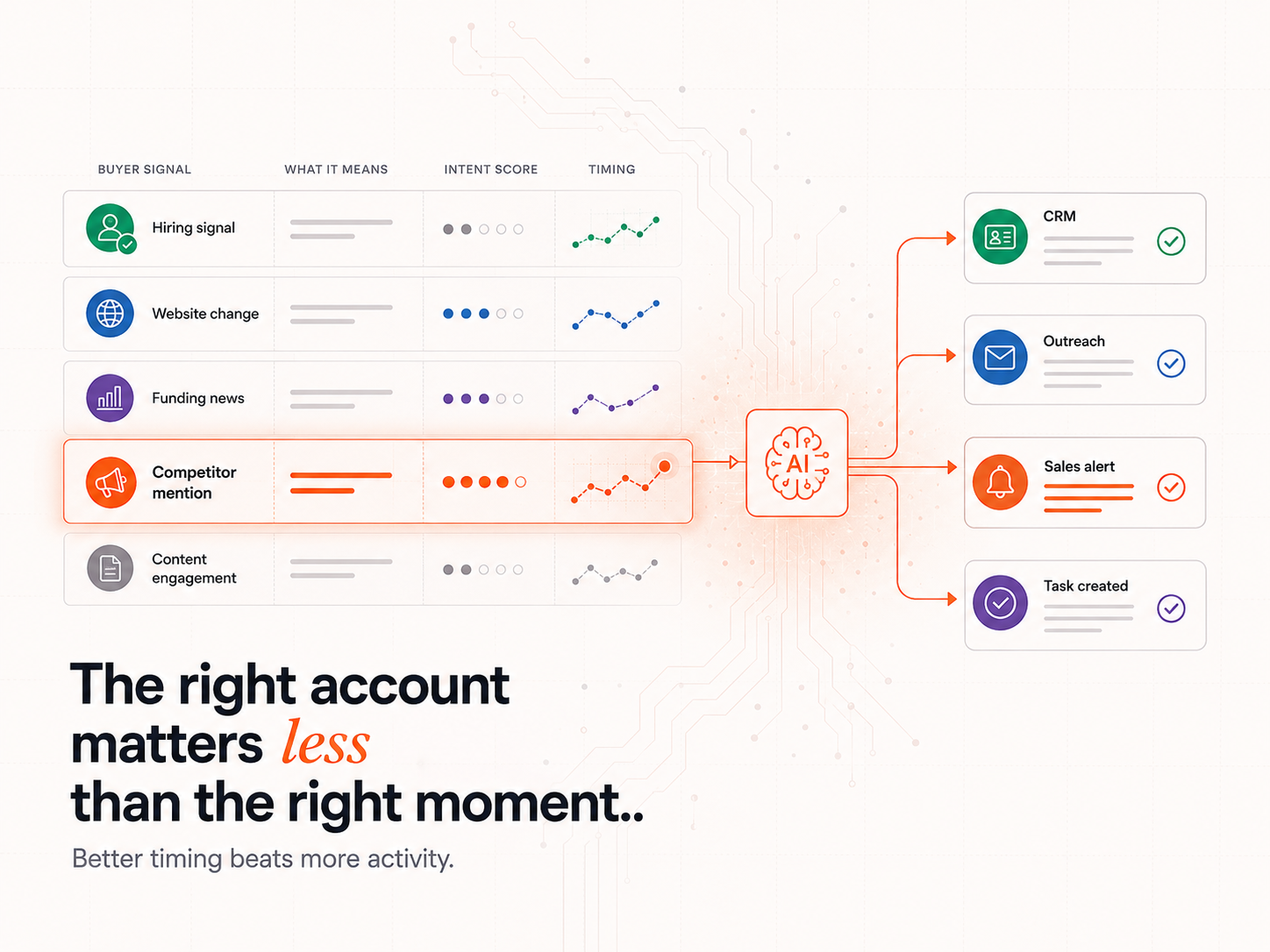
Signal-led agents do not just decide how to reach a prospect. They decide when. A prospect who just posted a VP of Sales job opening is in a different buying window than the same prospect 6 months earlier. Standard agents do not detect this. IR's signal-based selling framework monitors these events continuously and fires the agent at the exact moment the window opens, not when an interval expires.
How Do AI Agents Qualify and Engage Leads Without Human Oversight?
AI agents qualify leads by scoring each prospect against ICP criteria, engagement data, and live buying signals. Every contact in the pipeline carries a score that updates in real time as the agent pulls new enrichment data from Clay and pushes it into HubSpot. Leads that cross the qualification threshold are routed to a human SDR automatically, with full context attached.
Data enrichment and lead scoring at scale
Clay connects to 75+ data sources to enrich each prospect record: company size, funding stage, tech stack, recent hiring activity, and LinkedIn signals. The AI agent scores each contact before outreach begins. Manual list cleaning is eliminated. Every SDR conversation starts with an enriched, scored, and contextually relevant lead rather than a raw LinkedIn export.
The lead scoring layer is where most AI prospecting stacks fail. Agents running off unvalidated lists produce high-volume, low-precision outreach that damages sender reputation and generates spam complaints. Clay's waterfall enrichment approach, which IR builds into every client stack, resolves this before the agent sends its first message.
Multi-channel outreach and follow-up logic
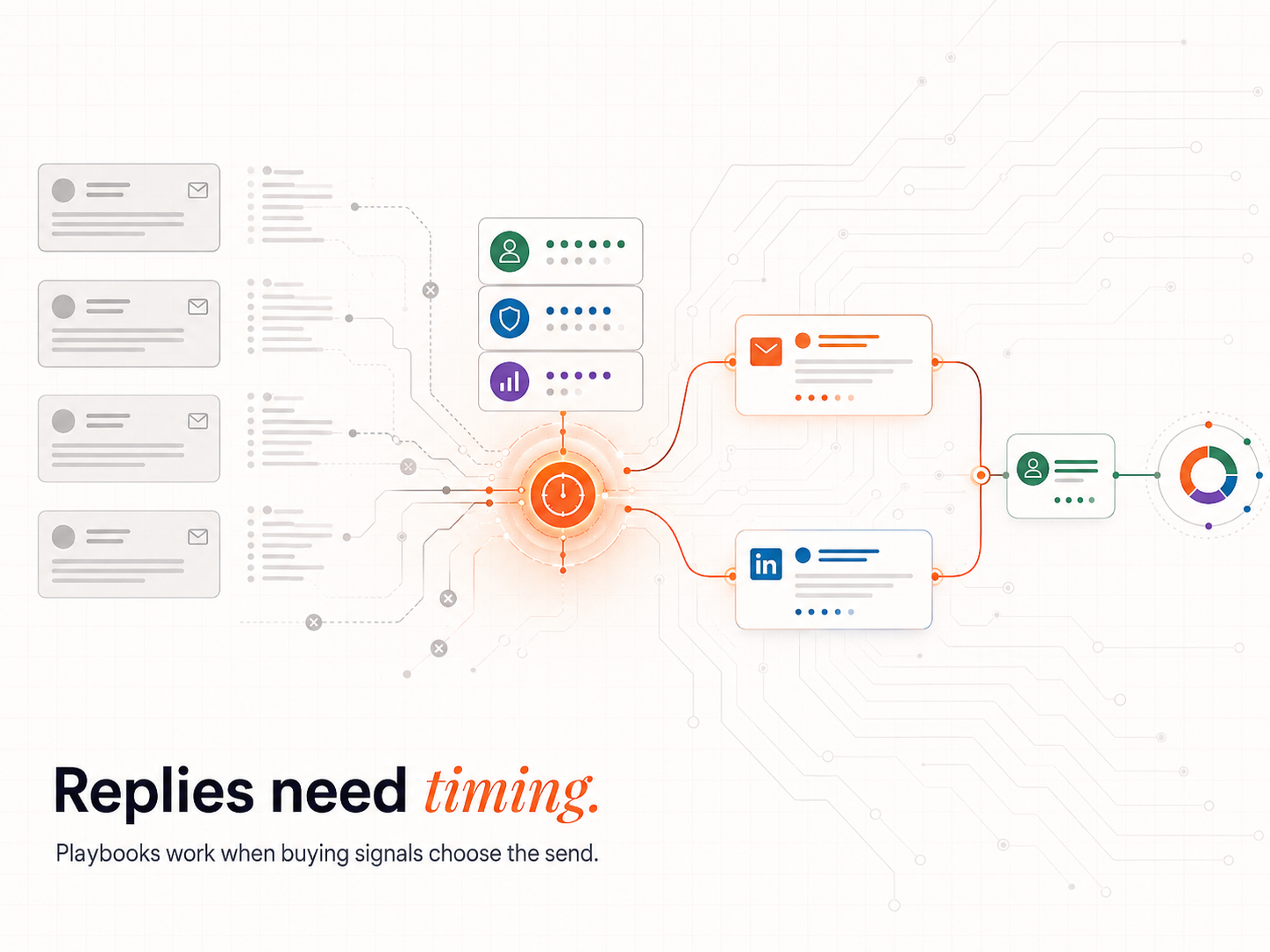
The agent launches sequenced outreach across email and LinkedIn based on the prospect's role, industry, and trigger event. A funding announcement fires one personalised sequence. A new VP of Revenue hire fires a different one. Each message references the specific signal that triggered it, producing relevance that generic drip sequences cannot replicate.
Cognism's 2025 cold calling report found 82% of buyers accept occasional seller outreach. The inverse is equally true: outreach that arrives at the wrong moment or without relevance generates unsubscribes and spam flags. Signal logic prevents this by ensuring the agent does not reach out before a buying window exists.
Which AI Prospecting Workflows Generate the Most Pipeline in 2026?
The workflows generating the most pipeline act on verified account-level signals rather than contact-level behaviour. An account where 3 people are actively reviewing your pricing page but none have filled a form is a stronger signal than a single form fill from an unknown contact at a cold account. Agents that detect the former outperform agents that wait for the latter.
Ebsta's 2025 GTM Benchmarks found 78% of sellers missed their quotas in 2025, up from 69% in 2024. The gap between reps hitting quota and reps missing it correlates directly with signal quality feeding the pipeline, not with outreach volume.
Inbound lead qualification
An AI agent monitors website form submissions, email replies, and CRM activity in real time. It reviews the company profile, scores fit against ICP criteria, and sends an initial message within minutes of a prospect engaging. The Sydney-based SaaS client IR built this workflow for reduced SDR average response time from 4 hours to under 8 minutes. Accounts showing meaningful engagement are escalated to a human SDR for the discovery call, complete with enrichment data and a conversation summary.
Outbound cold prospecting at scale
The agent pulls target accounts from a Clay table filtered by ICP parameters: company size, industry, tech stack, and funding stage. For each contact, it writes a personalised opening line based on a recent account event: a new job posting, a LinkedIn update, or a news mention. The sequence launches automatically and reply data feeds back into HubSpot to update the pipeline forecast in real time.
One SDR managing this stack covered weekly outbound to 1,000 finance leaders without additional headcount. The productivity gain came from removing the manual research, list-building, and CRM-entry tasks that consumed 60% of SDR time on a traditional setup.
Signal-triggered account re-engagement
Dormant accounts are the highest-ROI segment for AI-driven re-engagement. When a dormant account hires a new VP of Revenue or closes a Series B, the buying context changes entirely. The IR system detects these events and re-opens the outreach sequence automatically, framing the message around the new signal. This eliminates the manual task of monitoring dead accounts against a news feed.
An automated sales pipeline built on signal logic does not just route new leads. It monitors the full account base continuously and resurfaces opportunities that manual processes leave invisible.
How Do You Deploy AI Agents Without Compliance Risk or Quality Loss?
Deploying AI agents without compliance risk requires 3 things: trigger logic that filters non-compliant sends before outreach fires, human review checkpoints for new sequences, and clear escalation rules that hand conversations to an SDR before the agent encounters an objection it cannot handle. In Australia, the Privacy Act 1988 and Spam Act 2003 both apply and carry meaningful penalties.
Australian compliance requirements
The Spam Act 2003 requires every commercial electronic message to include sender identification, an accurate subject line, and a functioning unsubscribe mechanism. The Privacy Act 1988 governs how contact data is collected, stored, and used, including restrictions on cross-border data transfers relevant to teams using US-based data providers.
IR builds both requirements into every workflow at the trigger level. The agent does not send unless the account record passes a compliance check. Opt-out processing runs through n8n, updating the CRM record within minutes and preventing the agent from re-contacting a suppressed contact.
Human review checkpoints
New sequences require human approval before they go live. Existing sequences require monthly review of reply patterns to catch tone drift, declining engagement, and any content that has drifted outside brand guidelines. This is not a limitation of AI agents. It is a quality control layer that prevents the agent from scaling a problem instead of scaling performance.
IR's deployment model at its GTM Engineering practice pairs every agent stack with a documented review cadence. The client's internal team runs monthly reviews against a checklist IR provides at handover. No ongoing retainer required.
Metrics that track agent quality
The metrics that indicate a healthy agent stack are conversion metrics, not volume metrics:
- Reply rate per sequence: replies per 100 sends, not total outreach volume
- Escalation conversion rate: percentage of hot leads handed to SDRs that convert to booked meetings
- Trigger accuracy: is the agent firing for ICP-matched accounts, or generating noise from non-ICP contacts
- Opt-out rate per send: a rising opt-out rate signals tone drift or audience mismatch before it compounds into pipeline damage
HubSpot's 2026 State of Marketing found 61% of teams believe AI represents the biggest industry disruption in 20 years. Teams navigating this shift successfully invest in dashboard-first deployment before scaling agent volume.
Prospecting
Intelligent Resourcing is a Revenue Operations Studio. It designs and builds signal-led prospecting systems for B2B firms with named-account targets and 6-to-12-month buying cycles, monitoring job changes, funding events, and tech-stack shifts, then firing outreach when the Verified Buying Window opens.
FAQs
What is an AI sales agent?
An AI sales agent is a software system that executes early-stage sales tasks autonomously: outreach, lead scoring, data enrichment, and follow-up sequencing. It uses predefined trigger logic or a large language model to determine timing, message content, and escalation decisions, without requiring human input at each step.
Can AI agents fully replace SDRs in 2026?
No. AI agents handle repeatable, high-volume tasks: cold outreach, follow-up cadences, lead enrichment, and CRM logging. Human SDRs remain essential for objection handling, complex multi-threaded conversations, and relationship-building with senior buyers. The right model is a co-pilot structure where the agent handles volume and the SDR handles judgment.
How do AI agents qualify leads?
They score leads against firmographic criteria, engagement data, and buying signal history. Leads that meet a defined threshold are escalated to a human SDR with a full enrichment summary. Leads that do not meet the threshold remain in a monitoring queue and are re-scored when new signals appear.
Are AI agents compliant with Australian privacy laws?
Yes, if configured correctly. The Spam Act 2003 requires sender identification and a functioning unsubscribe mechanism in every commercial message. The Privacy Act 1988 governs how contact data is collected, stored, and used. IR builds both requirements into the trigger logic at the workflow level so the agent cannot send non-compliant messages.
What tools do AI agents use for B2B prospecting?
Most AI prospecting stacks include a CRM with open APIs (HubSpot or Salesforce), a data enrichment layer (Clay pulling from 75+ providers), a sequencing or engagement platform (Apollo, Smartlead, or Outreach), and an automation layer (n8n) to connect the three. Intent data providers are optional but increase trigger precision for named-account programmes.
What is the difference between a rule-based and LLM-powered agent?
A rule-based agent follows fixed if/then logic: specific actions trigger specific responses. An LLM-powered agent uses a large language model to generate context-aware messages, interpret replies, and handle variable conversation paths. Rule-based agents are more predictable and auditable. LLM agents personalise better at scale. Most enterprise B2B stacks use both.