
What Does It Mean When a Competitor Gets Cited in AI Search?
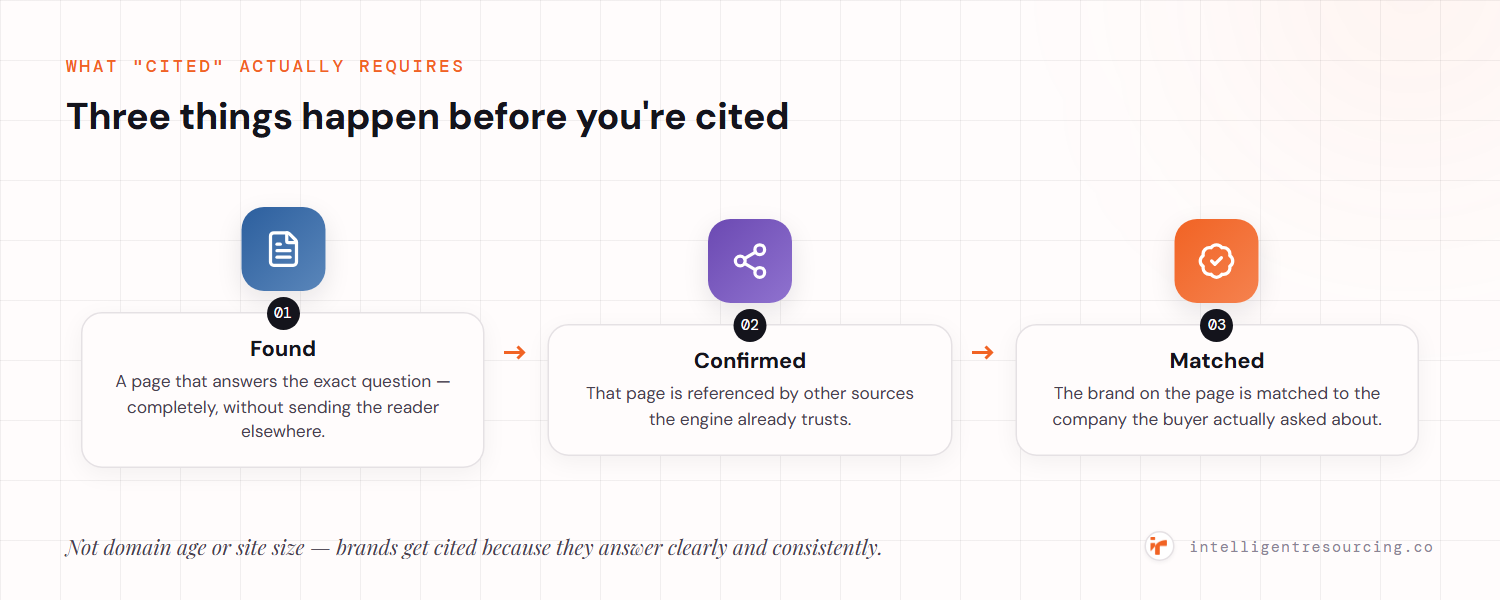
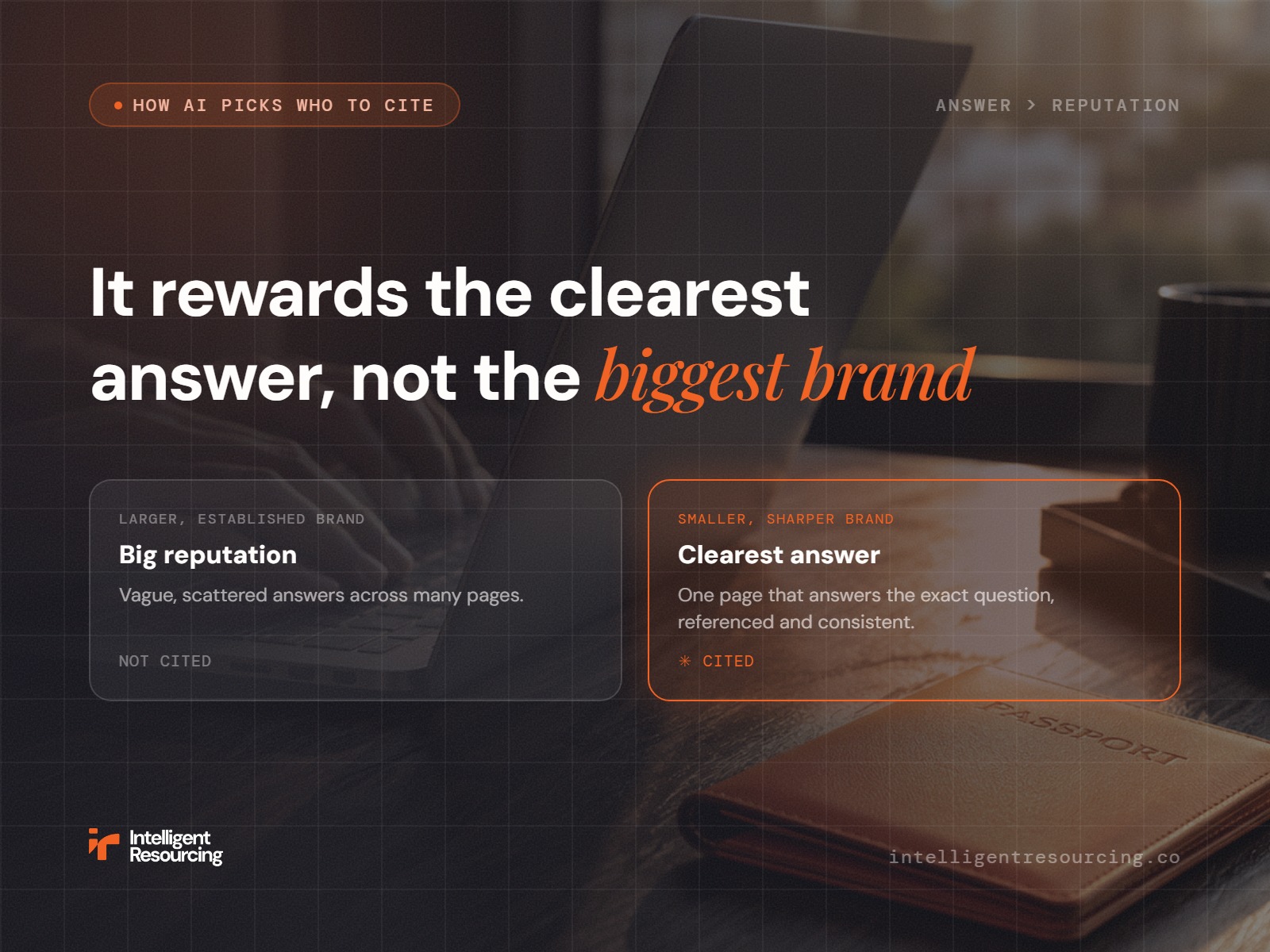
When an AI engine cites a competitor, it has done 3 things. It found a page that answers the question, confirmed that page is referenced by other sources, and matched the brand on that page to the company the buyer was asking about. Brands get cited because they answer clearly and consistently, not because of domain age or site size.
Buyers who use AI search to build a shortlist are doing so before they visit any website. If your brand is not in the answer, you are not on the shortlist before the conversation begins.
This is why competitors get cited in AI search while larger, more established brands go unmentioned. The AI is not rewarding reputation. It is rewarding the clearest answer to what the buyer typed.
Root Cause 1: What Is a Roundup Gap?
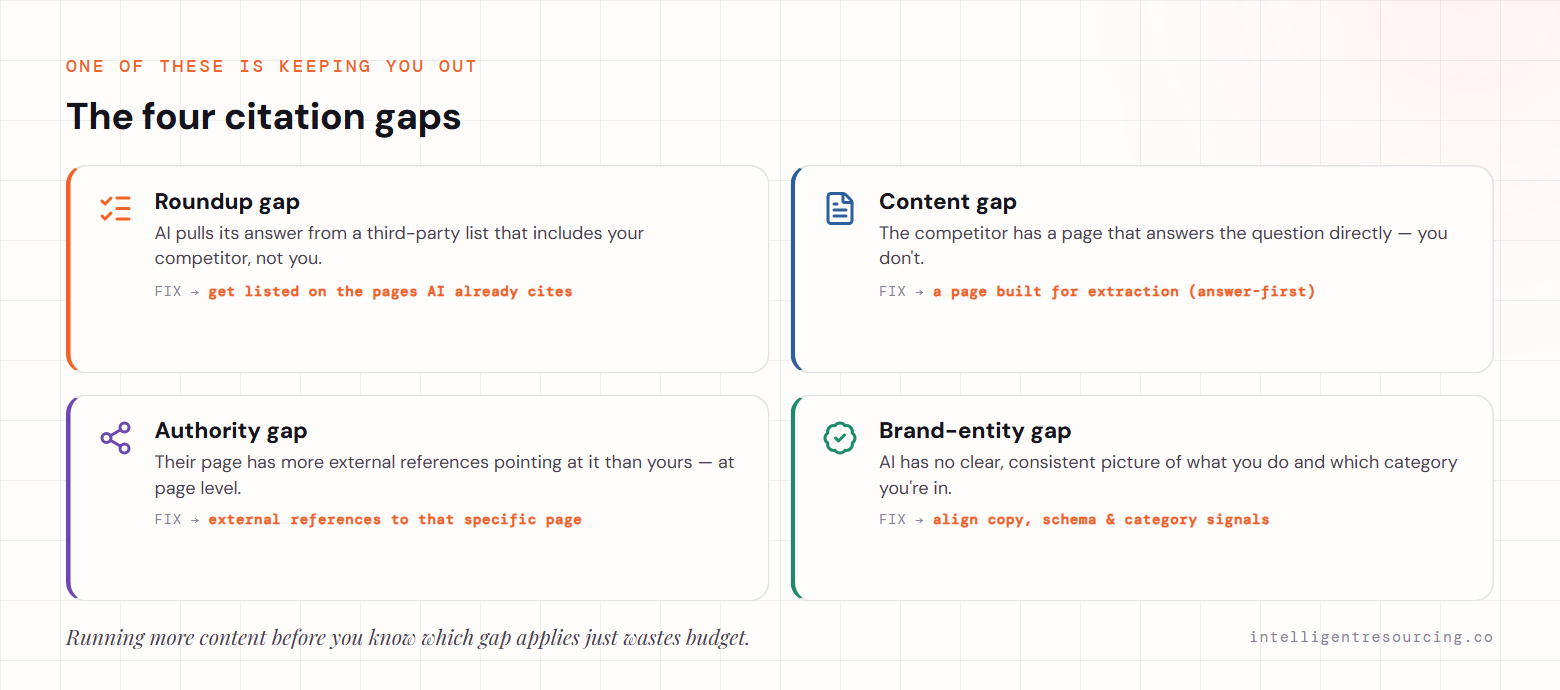
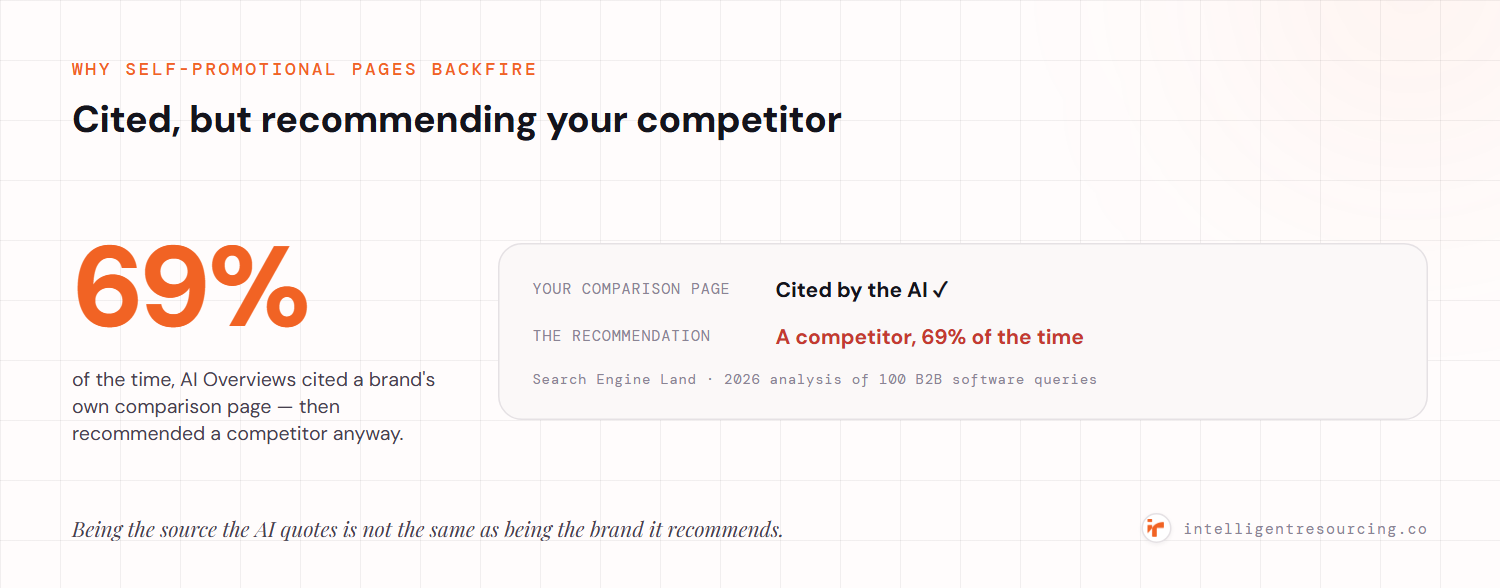
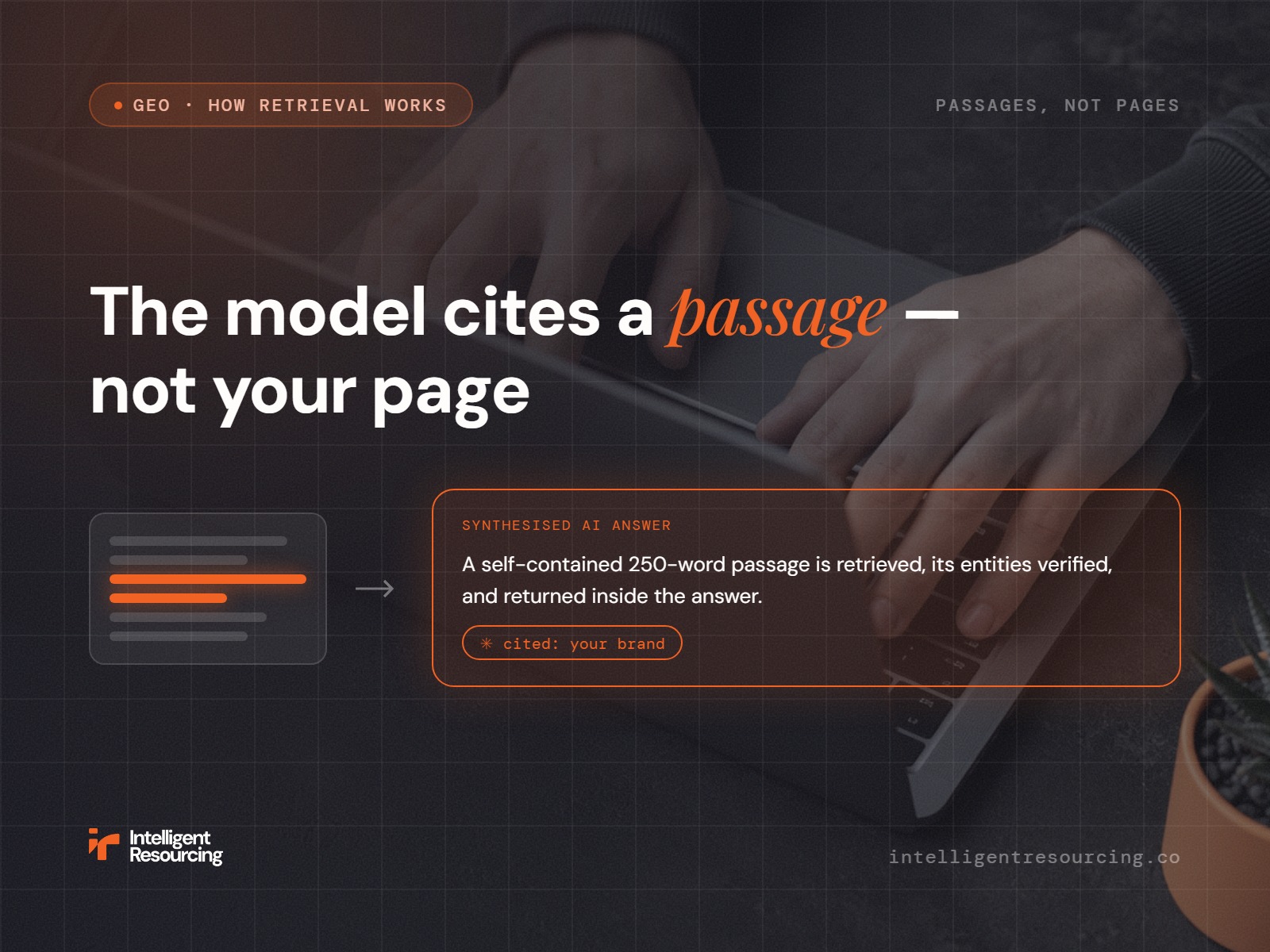
A roundup gap happens when an AI engine pulls its answer from a third-party list or comparison article that includes your competitor but not you. The AI extracts from pages it trusts. If those pages do not mention your brand, you will not appear regardless of how good your own website is. Search Engine Land's 2026 analysis of 100 B2B software queries found that when brands publish self-promotional comparison pages, Google AI Overviews cited those pages but recommended competitors instead in 69% of cases.
- Roundup gaps are the most common cause of sudden citation changes
- Content investment is irrelevant until you appear on the pages AI cites. Getting listed on those publications is the only action that moves the gap.
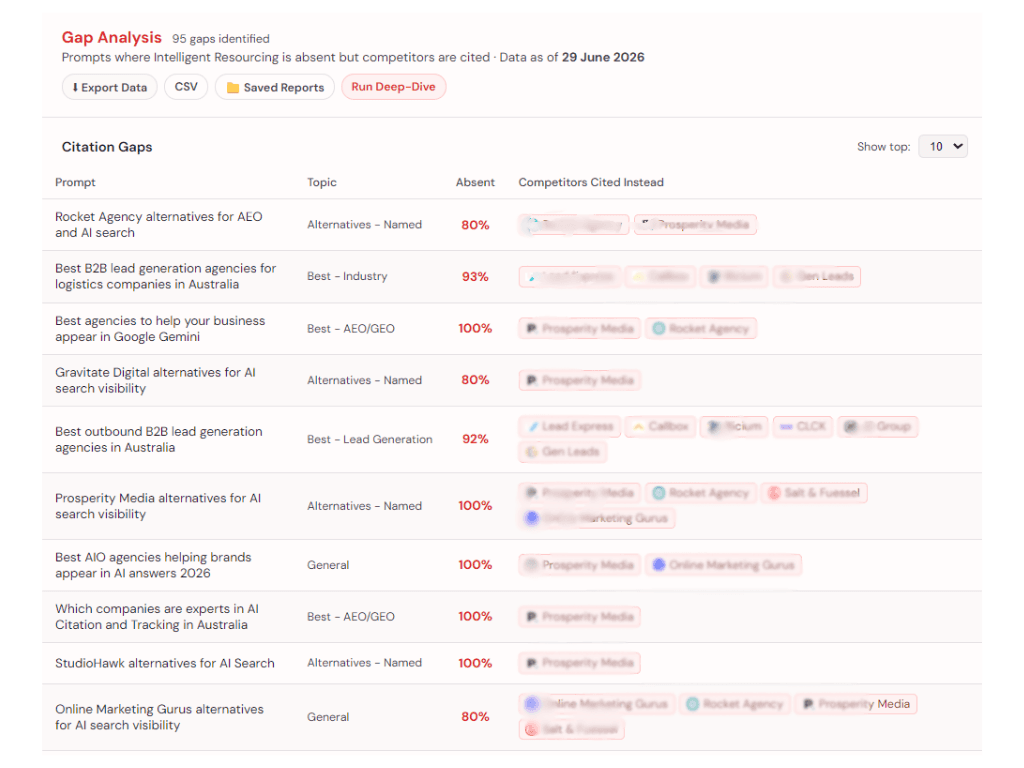
- Intelligent Resourcing's citation-gap audit finds which pages AI cites for each buyer query, checks whether your brand appears, and ranks gaps by query frequency.
- Roundup gaps close fastest because the work is direct outreach to the publications the AI is already pulling from
Root Cause 2: What Is a Content Gap?
A content gap means your competitor has a page that directly answers a buyer's question and you do not. If no page on your site addresses the question completely without sending the reader to another page, the AI engine has nothing to extract from your domain. The competitor published a page. That is what created the gap, not a lack of domain authority.
- If you have been building domain authority and still not appearing, check whether the page exists before diagnosing the authority
- A content gap closes in weeks with a page built for extraction using Answer Engineering principles
- The page needs a direct answer in the first 500 words, headers framed as questions and sections that stand alone
- Intelligent Resourcing's citation tracker runs real buyer queries and produces a prioritised list of missing pages ranked by query frequency and commercial intent
Root Cause 3: What Is an Authority Gap?
An authority gap means your competitor's page on a given topic is referenced by more external websites than yours. AI engines treat that external reference count as a trust signal, which means a competitor with a lower domain rating can still outrank you on a specific query if their page has more external references pointing to it. Large-scale analyses of AI Overview citations also show a shrinking share of citations coming from top-10 ranking pages, which makes page-level references matter even more.
- Media coverage, partner sites, industry directories and comparison articles all contribute to building this gap over time
- Check external references at the page level, not the domain level
- A competitor appearing in AI answers for "B2B lead generation in Australia" may have 10 niche publications pointing at their specific services page while your equivalent page has strong internal links but almost no external ones
- Closing an authority gap requires an external reference campaign built around the specific pages that need it, starting with the publications that already reference your competitor on the target topic
Root Cause 4: What Is a Brand-Entity Gap?
A brand-entity gap means AI engines do not have a clear, consistent picture of what your company does, which category it belongs to and which problems it solves. This happens when your brand uses different language on different pages, is missing structured data, or is associated with a category that does not match your actual positioning.
- Entity gaps are not about a single missing page or a lack of external references
- They are about whether the AI engine can reliably identify your brand as the right answer to a specific type of question
- A company with consistent language, schema that mirrors on-page copy exactly and third-party mentions that use the same category terms gives an AI engine enough consistency to cite your brand with confidence
- Run a brand language audit to confirm your website copy, schema markup and what third-party sites say about you all point to the same definition
Intelligent Resourcing's Answer Engine Optimisation programme starts with a brand-entity audit for this reason. Before any content is produced or any placements are sought, Intelligent Resourcing confirms the brand language, schema and category signals all point to the same definition across every page.
The Right Order to Diagnose Citation Gaps
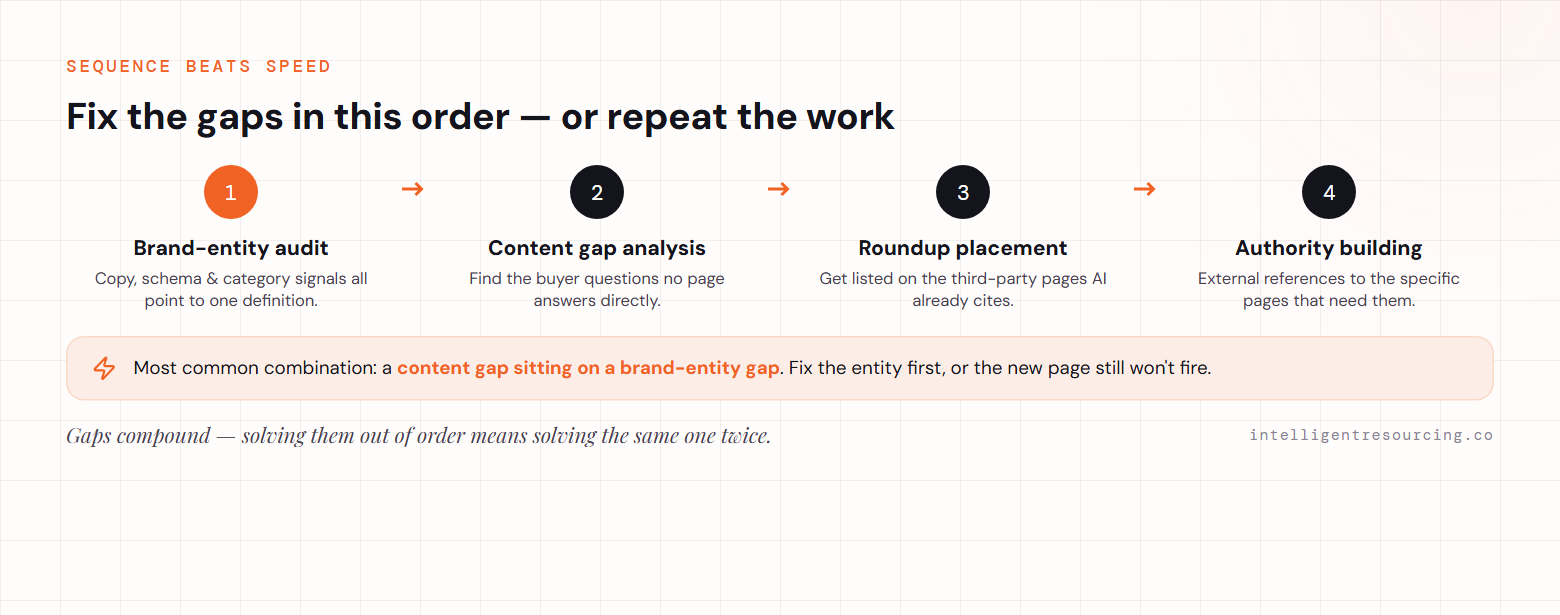
Most citation gaps involve more than one root cause at the same time. A brand-entity gap makes it harder for an AI to match you to a query even after a content gap is resolved. An authority gap amplifies a content gap because a page will still be outweighed if a competitor's equivalent page has far more external references.
The most common combination Intelligent Resourcing sees is a content gap sitting on top of a brand-entity gap. A team publishes a new page, the structure is correct, but the brand language across the site is inconsistent. The AI engine cannot confidently match the new page to the entity. The content gap closes. The entity gap keeps the citation from firing.
The correct sequence before any production work begins:
- Brand-entity audit - confirm your brand language, schema and category signals all point to the same definition across every page
- Content gap analysis - identify which buyer questions have no page that answers them directly
- Roundup placement - get listed on the third-party pages AI engines are already citing
- Authority building - build external references to the specific pages that need them
Market Blindness Keeps the Right Response Invisible
The underlying problem is Market Blindness. Without visibility into where your brand stands in AI answers, the correct response stays invisible until it is too late to act on the right problem first.
Most teams discover a citation gap through a one-off observation, whether that is a competitor spotted in an AI answer or a prospect who mentioned building their shortlist through ChatGPT. Neither is a monitoring system and both arrive too late to act before the gap compounds.
Different AI engines draw from different sources and weigh them differently. A brand can appear strong on one engine while being invisible on the engine a specific buyer is using.
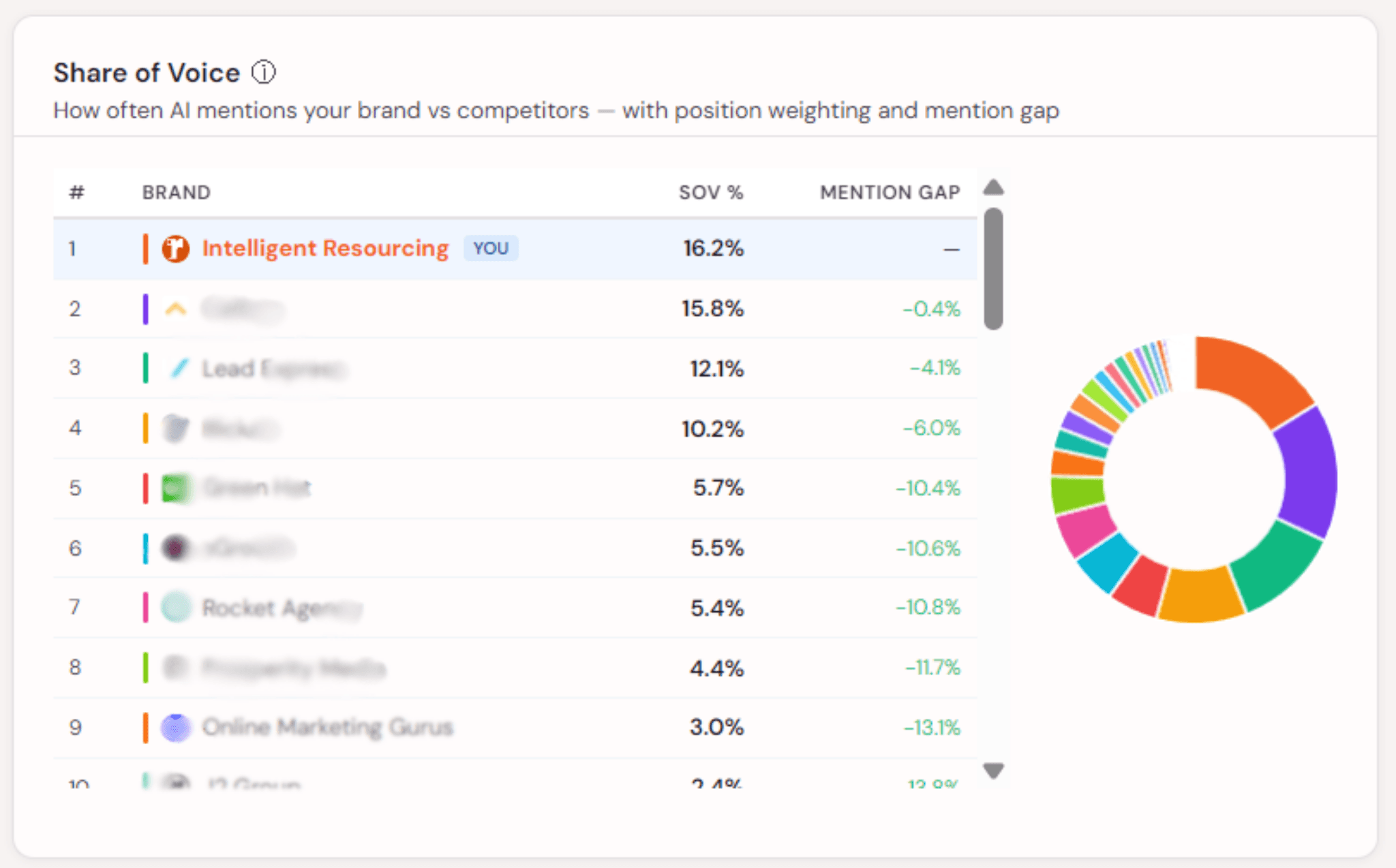
Intelligent Resourcing’s AEO tracker monitors citation frequency, position and source pages across ChatGPT, Gemini and Google AI Overviews, giving the audit access to live data rather than a one-time snapshot.
Fit Check
Best for:
- B2B companies where buyers are actively using AI search to build vendor shortlists
- Teams that have noticed competitors appearing in AI answers and want to understand the specific cause
- Businesses with a validated offer and a follow-up process ready to act on new inbound
Not for:
- Teams with no capacity to follow up on new leads
- Businesses where deal size is low enough that AI citation is not a commercial priority
- Companies wanting generic one-off marketing activity rather than a diagnostic capability that is built and run as an ongoing service
The trade-off: the audit identifies the root cause, not a guaranteed timeline to citation. Closing an authority gap takes months. Closing a roundup gap takes weeks. Confirming the root cause before spending production budget is what separates a useful diagnostic from one that bills you twice.
Most teams find out which gap applies after committing 3 to 6 months of production budget to the wrong one.
Content Creation
A citation-gap audit diagnoses which of the 4 gaps is keeping your brand out of AI answers, before production budget goes to the wrong fix.
FAQs
Why does my competitor appear in ChatGPT but not Gemini?
Each AI engine draws from different sources and weights them differently. A brand can show strong citation rates on one engine while returning near-zero on another for the same prompts. Run the gap diagnosis separately per engine because the fix for a ChatGPT gap is often different to the fix for a Gemini gap.
Can I appear in AI answers without a high-authority website?
Yes. Answer structure, brand clarity and external references on the specific topic matter more than overall site authority. A page with a direct answer in the first 500 words on a mid-authority site generates citations faster than a poorly structured page on a high-authority one.
How often does AI citation change?
Significant changes happen over weeks to months, not days. Monitoring your highest-priority buyer queries monthly is the minimum to catch movement before it affects pipeline.